Week of May 20 through May 26
Something to think about this week: How you would define the words “Confess” and “Believe?”
DAILY BIBLE READINGS
Mon. – Joel 2:28-32 – Call on God and Be Saved.
Tues. – Romans 9:14-16, 25-33 – Striving on the Basis of Faith.
Wed. – Romans 11:1-4, 17-27 – All Israel Will Be Saved.
Thurs. – Deuteronomy 30:11-20 – God’s Word Is Very Near.
Fri. – Mark 5:35-43 – Do Not Fear, Only Believe.
Sat. – Isaiah 52 – A Beautiful Announcement of Salvation.
Sun. – Romans 10:1-17 – Confession and Belief Lead to Salvation.

Man: Father, I have sinned.
Priest: And how how have you sinned?
Man: I have stolen someone’s bike, and am now here to give it to you.
Priest: No, no – don’t give it to me; return it to the person you have stolen it from and you shall be forgiven.
Man: I did that, but he said he didn’t want it.
Priest: In that case, you may keep the bike for yourself.
The man leaves, and after the day is over, the priest comes out of the church to find his bike missing.
Lesson 13 – May 26 – Who Has Believed?
Righteousness and Faith
Many in Paul’s audience believed they could achieve righteousness through their historical position as “God’s people” and by following the law of Moses. A key part of Paul’s message to the Jews was that Jesus was, in fact, the Messiah predicted by God’s prophets. Even today, the relationship between the Old and New Testaments and the fulfillment of prophecy in hundreds of details forms a convincing argument that Jesus was indeed God’s Messiah, the Savior for the world.
We may say we are not bound by extensive Old Testament laws, but Jesus summarized the whole law into only two commands: Love God, and love your neighbor (Matthew 22:37-40). If we’re honest, it doesn’t take long to realize we can’t even fully keep these by our ability alone. Therefore, we cannot stand in our own righteousness before a holy God. But God has made this possible through Jesus’ sacrificial death in our place. His resurrection proved He triumphed over death and fully paid the penalty for our sins.
All we need to do to claim this righteousness is to simply believe in our hearts that Jesus is fully God and Lord of all. Saving faith trusts that Jesus accomplished what we cannot do on our own. We confirm our belief and heart change toward God when we confess Jesus as the living Lord. Our belief and confession work together to bring us to salvation, and we stand righteous (not guilty) before God.
Once we have received God’s mercy and gracious salvation, He calls us to share that good news with others. Many people come to faith through hearing about Jesus, the Word of God, who freely gives eternal life to all who ask.
Read more about this here–> https://bethelcpcky.com/abcs-of-salvation/
Week of May 13 through May 19
Something to think about this week: Contradictions we may feel in our Christian walk (for example, we are saved by faith so we don’t have to sin, but we still sin).
DAILY BIBLE READINGS
Mon. – Isaiah 26:1-11 – Trusting in God Brings Perfect Peace.
Tues. – Isaiah 40:1-11 – The Penalty Has Been Paid.
Wed. – Acts 2:1-4, 14, 16-24, 36 – God’s Spirit Poured upon All Flesh.
Thurs. – Acts 2:37-47 – The Firstfruits of Reconciliation.
Fri. – Genesis 33:1-15 – Brothers at Long Last Reconciled.
Sat. – Psalm 29 – May God Bless Us with Peace.
Sun. – Romans 5:1-11 – Peace with God through Jesus Christ.
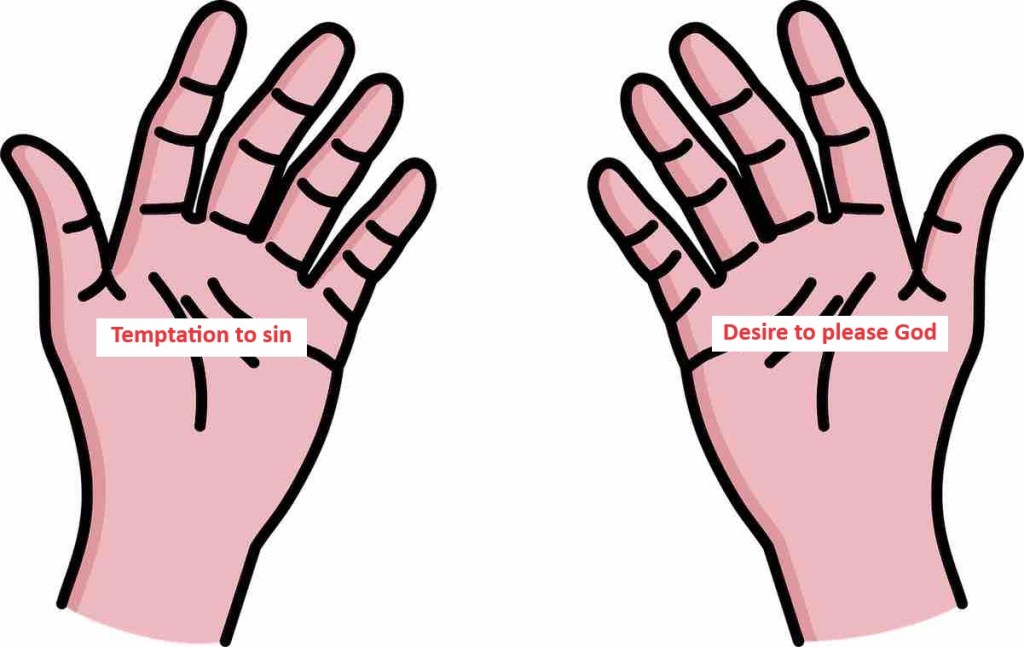
Lesson 12 – May 19 – Reconciled to God
Carissa had been a Christian for only a couple of months when she voiced some questions about her newfound faith to the campus minister and his wife, Mike and Sarah—the two people who had been so instrumental in leading her to Christ. She had never gone to church; but when she attended a freshmen get-together at the campus ministry house with her roommate, she found Mike and Sarah easy to talk to and very good listeners. She began attending the ministry’s services the next week and put her faith in Christ the following week.
“Even as a Christian, sometimes it feels like I’m a little bit of a walking contradiction,” Carissa told them. “Is that okay?”
“Well,” Mike responded, “as growing believers, we have to keep in mind the two-sided reality of the Christian life. On the one hand, we realize we’re complete in Christ—that our acceptance with Him is secure. But on the other hand, we realize we’re growing in Him—that we are becoming more and more like Him.”
“On the one hand,” Sarah added, “we feel the presence of Christ. But on the other hand, we feel the pressure of sin.”
“On the one hand,” Mike explained, “we rest in the peace that comes from being made right with God. But on the other hand, we still face daily problems that often help us grow.”
“And that’s why,” Sarah chimed in, “it’s important to remember these two sides of the Christian life—so we won’t grow discouraged as we face temptations and problems, but also so we’ll learn to depend on the power of Christ, who lives in us by the Holy Spirit.”
God’s promise of hope and eternal life with Him can be ours when we understand it is possible to be fully reconciled with God. The first step for any kind of reconciliation is to recognize we have done wrong. This includes accepting that we are sinners in need of God’s mercy and asking for forgiveness. When we trust Jesus in faith that He will save us from God’s wrath, we receive salvation and are justified—made right in God’s sight. Reconciliation and peace with God are made possible through Jesus’ sacrificial death on the Cross.
We are powerless to save ourselves, and we receive the gift of faith only from God. We step out in faith when we sincerely repent and accept God’s mercy. From that place of trust and rest in God’s grace, we naturally tell others about the gift of reconciliation and peace with God that is available also for them. The Holy Spirit working in us helps us to offer compassion and grace to others in the hope that they also will experience saving faith and eternal life with God.

Week of May 6 through May 12
Something to think about this week: One or two promises you have made that you have not yet kept, though you have intended to.
DAILY BIBLE READINGS
Mon. – Matthew 20:1-16 – God Is Generous to the Unworthy.
Tues. – Genesis 13:14-18 – A Great and Blessed Nation.
Wed. – Genesis 15:1-6 – A Promise of Countless Heirs.
Thurs. – 1 John 2:12-17 – Little Children, Your Sins Are Forgiven.
Fri. – Psalm 32 – God’s Abundant Forgiveness.
Sat. – Romans 4:1-12 – Trust God, Who Justified the Ungodly.
Sun. – Romans 4:13-25 – Christ Was Raised for Our Justification.

Lesson 11 – May 12 – Reckoned As Righteous
Trust and Promises Dogs are amazing. Okay, I admit I am an over-the-top dog person. Every day, I take my two dogs for a walk. I give them fresh water and food. Treats are always at the ready. When I walk to another room, they follow, me. When hubby and I retire for the night, so do they—in our bed. They trust me implicitly. As they wag their tails and gaze at me with love and devotion, they are fully persuaded that I will love them and be there for all their needs. Forever.
Today, we study Abraham’s trust in his “Master.” He trusted his heavenly Father implicitly. God told Abraham, against all earthly odds, that he would “be the father of many nations” (Gen. 17:4b). That was a crazy thought to Abraham because in his mind, he and his wife, Sarah, were “as good as dead” (Rom. 4:19a), too old to become parents. But Abraham believed God. He was fully persuaded that God was trustworthy. He had faith that God could and would do what He had promised.
Do we have implicit trust in our God? He’s given us many promises in Scripture. He’s proven Himself faithful, time after time. Deuteronomy 7:9 reminds us, “Know therefore that the LORD your God is God; he is the faithful God, keeping his covenant of love to a thousand generations of those who love him and keep his commandments.” God is faithful; He is trustworthy. Let’s have faith that He can and will do what He has promised.
We have to daily choose to trust God and His promises, no matter what is happening around us. When we make decisions based on His promises, it pleases Him and helps us in our spiritual walk with Him.
Week of April 29 through May 5
Something to think about this week: Why do we need people to forgive us?
DAILY BIBLE READINGS
Mon. – Psalm 35:1-8, 22-28 – Vindicate Me, 0 Lord My God.
Tues. – Psalm 112 – Blessed Are They Who Fear God.
Wed. – Acts 3:12-26 – Repent and Turn to God.
Thurs. – John 3:1-8,13-17 – God So Loves the World.
Fri. – Psalm 5 – Lord, Lead Me in Your Righteousness.
Sat. – 1 John 1:1-2:2 – Christ Our Atoning Sacrifice.
Sun. – Romans 3:21-30 – Atonement by Christ’s Blood.
 A priest opens his confessional panel to a young boy.
The boy says, “Forgive me Father for I have sinned.”
The priest asked, “What have you done, my son?”
He replies, “I threw pickles into the well.”
The priest seems a little confused but says, “Very well. Say three Hail Marys and you will be forgiven.”
Four more boys follow and say the same thing, the priest wondering eventually if he’s being pranked. Finally, a young boy looking very upset steps into the confessional.
“Let me guess,” says the priest, “You threw pickles into the well?”
The boy sniffs and said, “No Father, I AM pickles!”

Lesson 10 – May 5 – Justified by Faith in Jesus
Our lesson’s Scripture passage has a great deal to say about the biblical term justification or being justified before God. The Greek verb for justified in our passage is dikaioo , which means to pronounce a person innocent or righteous. In this case, it refers to God’s declaration that a guilty sinner is righteous or innocent in His sight. This is a standing that is impossible for people to achieve in their own strength or by their own works of righteousness. However, by faith in Christ, a person can be declared just and righteous because he or she is in Christ.
So when sinners who have been saved by faith and forgiven of their sins stand before our holy God, He does not see them as they were. Rather, He sees His Son in the sinners’ place. It has been rightly said that when people have been justified by faith in the Lord, then they stand before our righteous God “just as if” they had never sinned. This is truly amazing grace; for though believers were once enemies of God, we are now justified and adopted into His family. Truly, there is no better reason to rejoice than that!
No Room for Bragging
Bragging or boasting is the unholy byproduct of pride, which Scripture makes very clear has no place in the heart of a child of God. Pride can bring shame and contention into a believer’s life and his or her relationships with others (Prov. 11:2; 13:10). It can also bring a person low, even to the point of destruction (16:18; 29:23). In fact, prideful people will find themselves in opposition to God, which is not a good place to be. On the other hand, those who humble themselves before Him will find grace and favor in His eyes (Jas. 4:6).
Therefore, God’s people have no room to brag or boast in themselves, especially when it comes to being justified before God. For there is nothing that people can do to make themselves right before God, because no matter how hard they try, they will always fall short of God’s
perfect standard. This is why Paul wrote, “It is by grace you have been saved, through faith—and this is not from yourselves, it is the gift of God—not by works, so that no one can boast” (Eph. 2:8-9). Thank God we do not have to rely on our feeble works to get to heaven—it is all by His grace!
Spiritual Cleansing
You probably routinely cleanse your body and living environment, but what about spiritual cleansing? Spiritual cleansing involves two steps: confessing your sins and asking for the Holy Spirit to take control of your life again. As 1 John 1:9 tells us, “If we confess our sins, He is faithful and just and will forgive us our sins and purify us from all unrighteousness.” And Ephesians 5:18 reminds us that we should be filled not with sin but “with the Spirit.”
Do you desire to experience sweet fellowship with God through daily spiritual cleansing? If so, start your cleansing right now with a prayer of confession asking God to forgive your sins and cleanse you from all unrighteousness.
Week of April 22 through April 28
DAILY BIBLE READINGS
Something to think about this week: Things you would ask to get at Christmas or birthdays when you were a small child.
Mon. – 1 Kings 17:8-16 – God Provides for a Gentile Woman.
Tues. – 1 Kings 17:17-24 – Gods Authority Over Life and Death.
Wed. – Luke 4:24-30 – God Blesses Whomever God Wills.
Thurs. – Psalm 61 – Hear My Cry, O God.
Fri. – Psalm 20 – May God Grant Your Heart’s Desire.
Sat. – James 4:1-10 – God Gives Grace to the Humble.
Sun. – Matthew 15:21-28 – Jesus Hears a Desperate Mother’s Plea.

Lesson 09 – April 28 – Faith of a Canaanite Woman
The Bold Woman
Many years ago, when I was a Moody Bible Institute student, we had an annual “Open House,” where men were allowed to come and tour the women’s dorm. It was an exciting night! As a leader on our floor, I boldly decided I’d go out on a limb; I’d ask the president of the school to attend, and break open a piñata. I assumed he wouldn’t be able to attend because he was a busy man with speaking engagements all over the country. Imagine my shock when I received a letter saying he would be pleased to come! Our esteemed president, Dr. George Sweeting, attended our Open House and broke open that piñata to everyone’s delight. I have pictures for posterity.
Today, you’ll teach about the great faith of a bold Canaanite woman who asked Jesus to heal her daughter. And Jesus did heal, because of the woman’s faith demonstrated in her courage and in her persistence to press into Jesus’ heart for the hurting and lost.
It takes courage to make a bold request. Have you ever made one? Specifically, have you made a bold request to God? Scripture encourages us to pray boldly, with confidence. “If you believe, you will receive whatever you ask for in prayer” (Matt. 21:22). We know He hears our prayers and promises to respond; but He wants us to come in faith, like the Canaanite woman did in today’s lesson.
We tend to put God in a box. We think if we can’t do something ourselves, then God must not be able to do it either. There’s this subconscious idea that He is made in our image, instead of the other way around. The fact is God is so much bigger than we can even comprehend and no prayer request is too big or impossible for Him.
Remember that we have permission to approach Jesus boldly without the need for a temple or priest to act as an intercessor. We can take Him our requests directly and wait with expectation that they’ll be fulfilled according to His perfect will and timing. Think about these questions about our prayers: What is holding you back from praying bigger prayers? What is the worst that could happen if your prayer isn’t answered the way you’d like it to be? What’s the best that could happen if it was answered?
Week of April 15 through April 21
Something to think about this week: Times you have been honored.
DAILY BIBLE READINGS
Mon. – Luke 7:11-17 – Jesus’ Compassion for the Grieving.
Tues. – Psalm 92 – Sing Praises to God’s Name.
Wed. – James 5:12-20 – Confession, Prayer, and Healing.
Thurs. – Micah 7:7-20 – God Pardons Iniquity and Transgressions.
Fri. – Psalm 86:1-7,11-17 – God is Good and Forgiving.
Sat. – Romans 8:1-17 – No Condemnation in Christ.
Sun. – Luke 7:36-50 – Jesus Forgives a Sinner.

Lesson 08 – April 21 – Faith of a Woman Who Loved Jesus
Faith, Love, Kindness
A young couple came up a bit short as they were paying for their groceries. As the wife began to put back items to lower the bill, a man behind them handed her a $20 bill. “You don’t need to do that!” the woman responded. The man said, “My mom is in the hospital with cancer. She told me not to spend my money on more flowers, but rather give it to someone who needs it. So please accept this—I’m honoring my mother’s wishes.”
The man insisted. He was driven by kindness. His action expressed kindness in a tangible way. Indeed, actions often demonstrate the condition of the heart.
In today’s lesson we see a woman who expressed her faith and love for Jesus by her kindness too. Her actions confused the guests who observed. They judged her negatively for her actions, but Jesus rewarded her courageous behavior by forgiving her sins and giving her eternal life. Her new faith in Jesus saved her. Her actions expressed her faith and love for Him.
What about us? First John 4:7-8 says, “Dear friends, let us love one another, for love comes from God. Everyone who loves has been born of God and knows God.” Whatever we do, our actions should be a true reflection of our faith and love.
Differing Responses to Jesus
During Jesus’ earthly ministry, He offered Himself to several different groups of people. The barriers that separated them from the Savior and one another meant nothing to Him. He wanted to break down those barriers. Moreover, the standards by which some saw themselves as superior meant little to the Redeemer.
Some people received Jesus with joy, at least for a while. Some stayed with Him in the long term. And some ultimately helped bring about the Son of God’s crucifixion. In nearly two millennia, nothing much has changed. Our communities and even our churches are full of these same types of people, all of whom desperately need Jesus’ love, forgiveness, and healing power.
In the work I’ve done as a journalist and pastor, I’ve heard people out of boastful arrogance say, “Don’t you know who I am?”—as if their prestige or level of success was supposed to afford them extra-special privileges. On the other hand, I’ve also heard people out of self-introspection say, “If you only knew”—as if their past failures or dark hearts were enough for them to forfeit any hope of gaining respect and love.
A gathering of men at a dinner party (the “Don’t you know who I am?” types) has just witnessed a woman, whom they all know to be a woman of ill repute (the “If you only knew” type), walk into the room with a jar of expensive perfume. She is crying. As she weeps, her tears fall on Jesus’ feet. Using her hair to dry His feet, she then pours the perfume on them. She knows it’s not right—not fair, even—for her to be present in the room; but her faith moves her to extravagantly express her
love for Jesus.
Throughout the biblical story, God deals mercifully with sinners, rather than condemning them outright for their sins. Why wasn’t Jacob denounced by God for his conniving ways? Why wasn’t David disowned by God for his disgraceful actions? Why wasn’t the adulteress condemned by Jesus for her open disregard of the law? Why wasn’t Peter disavowed by God after his blatant denial of Christ? The answer is because there’s nothing in the world so tenacious and resolute as the grace of God!
An Open Heart
When the sinful woman approached Jesus with her tears and sorrow, Jesus received her with compassion and forgiveness; but when Simon the Pharisee muttered his disdain, Jesus rebuked him. When our hearts are truly open to Christ, He responds to bless us, strengthening our faith in Him and deepening our love for Him. For such a love as His so overflows within us that we naturally will express that love and faith in our actions.
Week of April 8 through April 14
Something to think about this week: The last time you asked someone for help and who that person was.
DAILY BIBLE READINGS
Mon. – Acts 10:1-15 – Accept What God Has Made Clean.
Tues. – Isaiah 42:1-12 – God’s Servant Enlightens the Nations.
Wed. – Malachi 1:10-14 – God Is Praised among the Nations.
Thurs. – Colossians 3:1-11 – Christ Is All and in All.
Fri. – Zechariah 8:18-23 – Nations Shall Entreat God’s Favor.
Sat. – Luke 3:1-14 – All Flesh Shall See God’s Salvation.
Sun. – Luke 7:1-10 – Jesus Helps a Righteous Gentile.

A woman hurried to a pharmacy to pick up the medication. When she got back to the car, she found her keys locked inside.
The woman found an old rusty coat hanger on the ground. She looked at it and said, “I don’t know how to use this.”
She bowed her head and asked God to send her some help.
Within five minutes an old motorcycle pulled up, driven by a bearded man who was wearing an old biker skull rag. He got off his cycle and asked if he could help.
She said, “Yes, my husband is sick.
I forgot my keys in the car, can you use this hanger to unlock my car?”
He said, “Sure.” He walked over to the car, and in less than a minute the car was open.
She hugged the man and through tears said, “Thank you, God, for sending me such a very nice man.”
The man heard her little prayer and replied, “Lady, I am not a nice man. I just got out of prison yesterday; I was in prison for car theft.”
The woman hugged the man again, sobbing, “Oh, thank you, God! You even sent me a professional!”
Lesson 07 – April 14 – Faith of a Centurion
Reach Out!
“The LORD is near to all who call on him, to all who call on him in truth” (Ps. 145:18). In other words, if we call on the Lord in faith and in sincerity, He will be close to us to hear whatever the need we express to Him.
Like the Roman centurion, whose faith Jesus commended, we need to confidently call out to our Lord while recognizing His divine authority. Even when He doesn’t respond to our petitions in the way we want, our trust in His love for us should be ever present and ever firm.
Our call to God should rest on who He is—that is, His faithfulness and righteousness.
On the one hand, we can know that Jesus listens to us whenever we call on Him. On the other hand, we can trust that His response to our call will be for our best. Jesus did not suffer so greatly even unto an agonizing death for our redemption that He would ignore us during our hardships
and struggles. Moreover, His triumph over death and evil tells us that He has the power to truly answer our petitions.
My Current Petitions
This week’s Scripture focuses on the faith that the Roman centurion displayed in Jesus and his petition for Jesus to heal his beloved servant. Such faith of this Gentile is what Jesus highly commended before the Jewish multitude and what the Gospel writer teaches us through God’s holy Word. And, as such, we are to call on the Lord in like manner.
Week of April 1 through April 7
Something to think about this week: Who do you consider to be your friends and why?
DAILY BIBLE READINGS
Mon. – John 1:37-42 – Come and See.
Tues. – Jeremiah 17:12-17 – Heal Me, and I’ll Be Healed.
Wed. – John 4:4-18 – Jesus Provides Living Water.
Thurs. – John 4:19-29, 39-42 – Worship God in Spirit and Truth.
Fri. – Psalm 66:1-5, 13-20 – Tell What God Has Done.
Sat. – Isaiah 6:1-8 – Here Am I; Send Me.
Sun. – Luke 5:17-26 – Jesus Heals and Forgives.

Proverbs 17:17 tells us, “A friend loves at all times, and a brother is born for a time of adversity” What a blessing it is to have good friends, people who care about you and will go out of their way to help you and encourage you.
Many churches have a small group ministry. It’s a small circle of people who meet regularly, and get to know one another’s joys and sorrows. I led a small group of ladies from my church, many who were retired, widowed, or single, who truly needed the friendship of others; they needed to belong to a “tribe.” One lady had a kidney transplant; and the group was there to pray, help, and support her as she went through that scary time. Another had a wayward child. We listened and prayed. Still another was unsure of her salvation. We walked with her through Scripture passages, which provided assurance, until she joyfully believed she was saved by the blood of Jesus, now and forevermore.
In today’s lesson, we have the story of the four wonderful friends who brought their lame friend to Jesus for healing, fully believing Jesus could help him. They believed and went “above and beyond” to do what they needed to do to get Jesus’ attention.
Let’s be that kind of friend not only to our brothers and sisters in our church family, but also to our neighbors and others who may not have met our heavenly Friend, “a friend who sticks closer than a brother” (Prov. 18:24b).
Lesson 06 – April 7 – Faith of Four Friends
What does friendship mean to you? Some may say that their friends provide companionship and shared experiences. Others might note how their friends help them through troubled times and overwhelming hardships. Still others might relate how their friends are people in whom they can trust with their most inward thoughts and feelings.
Do you prefer to have a few friends or a lot of friends? This question takes into consideration that people are different in their preferences regarding friendships. While there are those who are more comfortable with having one or two friends, there are others who enjoy having many friends and even many circles of friends. Those are the extreme ends of a wide range of possibilities; and, of course, none is superior. It only indicates the diversities of our personalities.
Why is forgiveness an important element in every friendship? Everyone is flawed. Either there is a defect in our friend’s character or an act of betrayal in their behavior; and for our friendship with that person to continue and grow, we must forgive. Moreover, the same is true if the roles are reversed. Forgiveness is reciprocal and continuous, and that is why enduring friendships are precious and priceless.
Friends Forever
What is astonishing about the friends of the paralyzed man in this week’s Scripture is not so much their effort in getting their disabled friend to the Lord but their faith that this teacher could miraculously heal him. Moreover, this man believed as well, and such a faith even moved Jesus to the point that He Himself called the paralyzed man His “friend”!
To be a friend of Jesus is a marvelous blessing! He blesses families and communities centered on Him, and within those relationships He forms intimate friendships, where trust and the sharing of burdens help us thrive as His children.
Of course, no one is without faults. That’s why when a friend still loves us despite our faults, we know we have a true friend who will demonstrate his or her love for us with encouragement, loyalty, and empathy, all the same qualities we should show in return.
A good friendship takes a tremendous amount of effort as well as the ability to forgive and receive forgiveness to make it work. In other words, to have a good friendship, we must be willing to give of ourselves to that other person. Jesus was so right when He said, “Greater love has no one than this: to lay down one’s life for one’s friends” (John 15:13).
Encouragement Works Both Ways
While the friends of the paralyzed man lowered him before Jesus, they did so because of their love for their friend. Such love should be reflected in our love for our friends, and hopefully such love should be reflected in their love for us. Such friendships are the kind of friendships that Jesus wants for us.
Week of March 25 through March 31
Something to think about this week: What fears you have and why.
DAILY BIBLE READINGS
Mon. – Mark 14:1-9 – Faith Revealed through Extravagant Love.
Tues. – Exodus 14:10-20 – Faith in God’s Deliverance.
Wed. – Exodus 14:21-31 – Faith in God’s Protection.
Thurs. – Mark 14:17-26 – Faith Challenged and Encouraged.
Fri. – Mark 15:25-39 – An Unexpected Confession of Faith.
Sat. – Psalm 22:1-11, 27-31 – Faith Despite Pain and Loss.
Sun. – Mark 16:1-8 – Faith in the Risen Christ.

The older doctor marched back to the first and demanded, “What’s the matter with you? Mrs. Terry is 63 years old, she has four grown children and seven grandchildren, and you told her she was pregnant?”
The new doctor smiled smugly as he continued to write on his clipboard.
“Cured her hiccups though, didn’t it?”
Lesson 05 – March 31 – The Resurrection: Key to Faith
Don’t Be Afraid!
If you’re like me, you are forgetful. It seems I’m always looking for my keys, my phone, my purse, my glasses. . . well, you get it. The other day, my husband and I were talking with friends we were staying with in another state, and the question arose: “What did we have for dinner last night?” None of us—all in our 60s and 70s—could remember what we ate the night before. That gave us a good laugh. Eventually, we remembered it was tacos.
The women going to Jesus’ tomb forgot about something too. It wasn’t until they were on their way that they realized they wouldn’t be strong enough to roll the heavy stone away to get to Jesus’ body. But God provided. (That is an understatement!) After seeing the stone rolled away, the body gone, and receiving instructions from an angel, they were pretty shaken. They were fearful.
We sometimes are fearful too. God is our Provider—our Jehovah Jireh (The LORD Will Provide). What do we need to fear? When life provides overwhelming situations, we can go to our Jehovah Jireh. He understands why we are fearful. He says, “For I am the LORD your God who takes hold of your right hand and says to you, Do not fear; I will help you” (Isa. 41:13).
Can you imagine anything more wonderful than the King of the universe holding your hand and comforting you? Our Jehovah Jireh raised Jesus from the dead to redeem us and calm our fears.
The women who traveled to Jesus’ tomb that first Easter morning experienced a variety of emotions. They were in grief over the death of someone they loved; they were worried about how they were going to roll away a stone that covered the entrance to His grave; they were frightened by the appearance of an angel sitting outside His tomb; they were rattled when they discovered that Jesus’ body was missing; they were frightened by the presence of a stranger sitting at the place where Jesus’ body was supposed to be; they were confused, alarmed, and stunned, not knowing what had happened, what it meant, or what may be coming next.
These three and others who followed Jesus eventually understood the significance of the fact that Jesus’ tomb was empty. It meant that Jesus was alive! When they finally realized this and then encountered the physical presence of their risen Lord, their sadness, anxieties, and fears were replaced with joy.
Our fears may include fear of death or what happens afterward; fear of pain or suffering in this life; fear of financial or material loss due to natural disasters or other unforeseen events; fear of abandonment by friends, family, or even God; fear that world events will continue to spiral out of control; fear that they will never be good enough for God or He will always hold something against them.
Knowing that Jesus is alive should make a difference on how we respond to the challenges we face each day. It should replace the anxieties regarding what we’re experiencing now with hope regarding what is to come. The decision to do that sometimes needs to be a daily one, as we pray this prayer: “Dear Jesus, let the knowledge that You are alive and dwelling among us make a difference in my life today.”
Week of March 18 through March 24
DAILY BIBLE READINGS
Something to think about this week: People you trust and why.
Mon. – Deuteronomy 28:1-14 – Blessings of Walking in God’s Ways.
Tues. – Titus 2:1-8 – Let Your Life Match Your Words.
Wed. – Proverbs 1:1-9 – Fear God and Gain Knowledge.
Thurs. – 1 Corinthians 5:1-11 – Refrain from Defiling the Church.
Fri. – 2 Timothy 2:8-21 – Vessels Prepared for Every Good Work.
Sat. – Acts 6:1-6 – The Ministry of Caring for Others.
Sun. – Acts 6:7-15 – A Spirit-Empowered Witness.

I don’t trust people with graph paper…
They’re always plotting something.

Lesson 04 – March 24 – Living in Faith
When we’re lax with our reading of Scripture, it becomes easy for us to miss the parts about how to handle the opposition to our faith. Because of that oversight, we’re more likely to tout and demand our personal rights and selfishly fight back when someone stands in our way of doing whatever we want to do and going wherever we want to go.
If we get bullied because we are compassionately living out our faith or presenting the Gospel of salvation, then we’re right in tune with Jesus’ teachings. But if we get put down because we’re being careless, or because we repeat a lie on social media, or because we brutalize someone as we “stand up” for ourselves, we’re nowhere near Jesus’ teachings.
With anything more than a casual reading of the Bible, we find that the people of God have almost always endured adversity and affliction for their faith. Those who believe in God will find themselves at points throughout their lives suffering for—or because of—their faith.
Stephen was one of seven deacons chosen to help with the care of the poor. His name means “crown,” reminding us of Jesus’ promise to the church at Smyrna: “Be faithful, even to the point of death, and I will give you life as your victor’s crown” (Rev. 2:10). In Stephen’s most treacherous hour, he put his trust in the Holy Spirit. When Jewish people demanded he defend himself, he chose to defend his faith in Christ instead.
Truthfully speaking, when good is spreading and increasing, evil is always present. Although there will be many people celebrating the good, there is always that group opposing the good. As God’s Word increases and more people are coming to Christ, unbelievers do not like it. It is during this opposition that believers should trust in the Holy Spirit. The Spirit will give wisdom and knowledge for all circumstances and instances.
The Spirit gave Stephen the words to say, and we can be sure He will do the same for us if we let those be our words and not the words we might like to say instead—words of anger or criticism. The greater the opposition we face, the more likely we are to lash out at those who oppose us and make the situation worse.
Week of March 11 through March 17
Something to think about this week: Your favorite flavor of ice cream and be prepared to defend why you think that way.
DAILY BIBLE READINGS
Mon. – 2 Timothy 4:1-8 – Proclaim God’s Message at All Times.
Tues. – Psalm 67 – Let All the People Praise God.
Wed. – Mark 5:1-2, 6-7, 11-20 – Proclaim What Jesus Has Done.
Thurs. – Acts 9:10-22 – A Powerful Defense of the Faith.
Fri. – Isaiah 1:16-20 – Come, Let Us Argue It Out.
Sat. – 1 Peter 2:4-12 – Live Honorable among Unbelievers.
Sun. – 1 Peter 3:8-17 – Be Ready to Speak for Christ.

This is a controversial topic and if you wish to explain your choice you had better be ready to defend it!
(click/touch the picture above for statistics and then come back to finish the lesson)
While this is a good-natured debate, one day we may be asked to defend our faith in Jesus, and we should always be prepared with an answer.
Lesson 03 – March 17 – Defending Our Faith
Forgiving Is Hard
An episode of the TV show Dateline told a story about a woman who had been viciously murdered. In the show, the victim’s sister was interviewed. She said she had forgiven the murderer, who was by then in prison. The interviewer replied, “How can you forgive someone for such a vicious murder?” The woman tearfully replied, “We are faith-filled people; and we need to forgive, just as Jesus Christ forgave us.”
What an awesome testimony, which reached millions of people across the airwaves! And what a beautiful illustration of today’s lesson theme, “Repay evil with blessing.”
It’s hard to do. When we’re insulted or worse, we want to reciprocate. But we’re taught in today’s Scripture to turn from evil, do good, and seek peace. “Always be prepared to give an answer to everyone who asks you” (1 Pet. 3:15), as the woman mentioned earlier did. She said she must forgive because Jesus forgave her.
This week’s lesson offers so much truth, but it is hard to carry out. We’re told to be loving, compassionate, and humble. This is hard when we feel we’re right and haven’t done anything wrong. But we can ask Him for help when we need it. Philippians 4:13 assures us, “I can do all this through him who gives me strength.” Psalm 29:11 reminds us, “The LORD gives strength to his people; the LORD blesses his people with peace.”
What Might Have Been
The world is not good at turning the other cheek but, instead, says to get even or get revenge. How might our world look if we made the godly choice instead of the human one?
What would the world look like if we all reacted with kindness instead of revenge when we’re wronged? What are you doing to contribute to this ideal in your own life?
A no-forgiveness culture is very prevalent today. It is the idea that once you’ve made a mistake, everyone must know about it, rake you over the coals for it, and make sure you never succeed again. They will write you off for the slightest mishap without mercy or hesitation. Does this sound like how Jesus would’ve reacted?
When we follow God’s principles instead of the world’s, we will be blessed and considered righteous in His eyes. This is greater than any praise the world could offer us.
Week of March 4 through March 10
Something to think about this week: What makes Christianity different from other major world religions?
DAILY BIBLE READINGS
Mon. – James 1:2-12 – The Testing of Faith Produces Endurance.
Tues. – James 1:13-18 – The Sources of Temptations.
Wed. – Psalm 139:1-12 – God Has Searched and Known Us.
Thurs. – Psalm 139:13-18, 23-24 – God Knows All Things.
Fri. – 2 Corinthians 11:22-33 – God’s People Boast in Weakness.
Sat. – 2 Corinthians 12:1-10 – Strength through Christ Alone.
Sun. – 2 Corinthians 13:1-10 – Live by Christ’s Power in You.

By Billy Graham • February 17, 2017 • Topics: Religions
Q: I’ve been studying the major religions of the world, but I’m puzzled about Christianity. What makes it different from the other religions? It seems different to me, but I can’t figure out why.
A: The difference between the religions you’ve been studying and Christianity can be summarized in two words: Jesus Christ. He is the center and foundation of the Christian faith, and He also is the reason why Christianity is different from all the other religions that people follow.
Let me explain it this way. All the religions you’ve been studying have one thing in common: they all are searching for God (even if they don’t call Him God, or they think there may be many gods and goddesses). They do this in a multitude of ways—but they’re all trying to find God and gain His favor by their sacrifices and good deeds.
But Christianity is different. Instead of us searching for God—God is searching for us! Instead of us reaching up to God—God is reaching down to us! This is why Jesus is so important, because He came down from Heaven to do for us what we could never do for ourselves: bring us to God. God is perfect and holy, and we are separated from Him by our sins. No matter how hard we try, we cannot erase the stain of sin by ourselves. But by His death and resurrection Christ did this for us.
I sense that down inside you are searching for God. But God is also searching for you! By faith turn to Jesus Christ and receive Him into your life today. God’s promise is for you: “Yet to all who did receive him, to those who believed in his name, he gave the right to become children of God” (John 1:12).
Lesson 02 – March 10 – Testing Our Faith
God Chooses the Weak
Second Corinthians 13:9 seems to echo an idea Paul put forward to the Corinthians at the beginning of his first letter: “But God hath chosen the foolish things of the world to confound the wise; and God hath chosen the weak things of the world to confound the things which are mighty” (1 Cor. 1:27, KJV).
Throughout the Old and New Testaments, God demonstrated His power through “weak” vessels, from Samson to Abraham to Moses to King David. All of these heroes of the faith had weaknesses or faults that hindered them in their walks with God. Yet, they accomplished great things through God’s power in them. Paul himself was aware and open about his shortcomings, but he recognized a universal truth. God uses imperfect vessels to perfect His work on the earth. Weakness does not disqualify anyone from serving God. Our weakness, our foolishness, only works to showcase the miraculous demonstration of God’s glory when we put our trust in Him.
Churches Examine Their Faith
Paul gave a call to action to the Corinthians to examine themselves and test their faith in Christ, as some were questioning Paul’s authority. There are times when Christians, whether as individuals or as a collective body, need to have a time of soul-searching, or testing, to ensure their beliefs and actions align with God’s Word.
The world around us is pushing Christian denominations to accept things that society now finds acceptable, no matter what the Bible says. Some denominations have begun blessing same-sex marriages. Others have ordained practicing homosexuals as ministers or church elders. Some churches have rewritten hymns to include more “inclusive” language. Whole denominations have split over these issues or tried to reach some kind of shaky truce. And, not being in a denomination does not make a church immune from these issues. Every church must examine where it stands on controversial issues that test our faith. Will your church stay biblical or not?
Debates among Christians are not new. For example, Christians have disagreed on what kind of music can be sung in worship and what instruments (if any) should be allowed. But as heated as those debates have been, these new debates again strike at the heart of who we claim to be as Christians. Will a church decide to redefine what the Bible calls sin in the name of progress, acceptance, and inclusion?
Many Christians are now going through a testing of their faith. They must seek God’s guidance, choose where they stand on the issues, decide whether or not they need to make a change, and face how that change will affect them.
Heaven Helps Those Who Help Each Other
The first-century Christians were persecuted on all sides, and many were even martyred for their faith. It was vital for these believers to rely on one another for support in the midst of trial and tribulation. Christians should understand that God calls us to a life of dependence, not only on Him, but on each other. We should make it a practice to encourage each other in the faith, pray for one another, and offer any other support needed to those who are suffering.
Take some time this week to reflect on where you are at in your faith walk. Assess if there are any behaviors you exhibit that need changing or areas that need work. Brainstorm ways you can be a voice of encouragement, not only for your brothers and sisters in Christ, but also for unbelievers.
Week of February 26 through March 3
Something to think about this week: What do you think it means to be a “holy nation”?
DAILY BIBLE READINGS
Mon. – 1 Corinthians 15:1-11 – The Faith in Which We Stand.
Tues. – Numbers 16:12-13, 23-34 – Turn Away from the Wicked.
Wed. – Genesis 18:20-22; 19:1-5, 15-17, 22-25 – Flee from the Presence of Sin.
Thurs. – 1 Peter 2:13-25 – Always Do the Right Thing.
Fri. – Genesis 5:18-24 – Walk with God.
Sat. – Jude 3-16 – Contend for the Unchanging Faith.
Sun. – Jude 17-25 – Remain in God’s Love.

The entire letter of Jude emphasizes a contrast between “mockers” and the “beloved” (KJV). Jude identifies his audience as “beloved” three times in verses 3, 17, and 20. The purpose statement of the book is for the “beloved” to “contend for the faith which was once delivered unto the saints” (vs. 3). They must contend for the faith because “ungodly people” have secretly slipped into the community and are trying to take advantage of God’s grace by living immorally (vs. 4). The apostles warned that such people would come (vss. 17-19), and Jude encourages his audience to remain in God’s love by building themselves up in faith and prayer (vs. 20-21). Fundamentally, the one way that God’s beloved can stay away from mockers and keep themselves in the love of God is to put their trust in the one who has the power to sustain their faith (vs. 24).
Lesson 01 – March 3 – Sustaining Our Faith
When People Bring You Down
In this week’s Scripture, Jude writes about scoffers who will come in among the church members and create division among them. Maybe you can think of some situations like that today, when the church becomes divided over different doctrinal interpretations or stands on various social or political issues.
What do we do in those types of situations? Should we confront the people- involved and tell them they’re wrong? Should we leave that fellowship and find another one? What happens when we find the same thing happening at our new church.. . and in every church?
Jude’s advice focuses first on what we need to do for ourselves: Remember that this has been prophesied, so we must build up our faith, particularly with prayer and patient endurance. But he also wants us to care about others who are being misled by destructive people and their teaching, encouraging us to try to save them while remaining careful not to be led astray ourselves. It’s too easy to follow the crowd, especially when the crowd is large.
Jude doesn’t suggest this is a problem we can solve, and we know historically this has always been an issue in the church. Rather than being discouraged about that, we can take care of our own responsibilities and look forward to the day when Jesus will sort it all out for good. Our task is to keep ourselves in God’s love and be part of the solution, not part of the problem.
When Scoffers Come
The world is filled with those who don’t believe in Jesus and even laugh at believing in Him. Even those who believe may be drawn away to false teachings that compromise biblical truths to accommodate society. Holding to the Savior can, as Jude says, “keep [us] from stumbling” and “present [us] before his glorious presence without fault and with great joy” (Jude 25).
Some suggestions are to pray for the Spirit’s guidance, or show kindness, or humbly share your faith journey. Arguing with someone usually does not accomplish what we want to happen.
 Bethel Cumberland Presbyterian Church