Week of August 19 through August 25
Something to think about this week: Things that have to be renewed regularly, such as drivers’ licenses, license plates, and car insurance.
DAILY BIBLE READINGS
Mon. – Proverbs 3:27-35 – Do Good Wherever You Can.
Tues. – Proverbs 31:1-9 – Defend the Poor and Needy.
Wed. – Ephesians 2:1-10 – Saved by God’s Rich Mercy.
Thurs. – James 2:14-26 – Faith without Works Is Dead.
Fri. – Isaiah 30:18-26 – Walk in God’s Way.
Sat. – Matthew 5:13-20 – Shine Your Light Before Others.
Sun. – Titus 3:3-11 – Saved by God’s Mercy.

Lesson 13 – August 25 – Devoted to Good Works
Devoted to Good Works
Amelia moved from a world-saturated culture into a Christian-saturated one. She had been surrounded by friends who had no religious belief system and few moral values; she had breezed through relationships like wind blowing through leaves; she had become addicted to drugs and alcohol; she had tricked and connived acquaintances out of money. But after moving in with family who lived across the country, she told them, “I’ve done some terrible things, but you give me hope that I can be forgiven.” Soon she discovered Jesus, and her family witnessed a marvelous transformation in her life.
When a person works an eight-hour day and receives a fair day’s pay for the time, that’s called a wage. When a person competes with an opponent and receives a trophy for performance, that’s called a prize. When a person receives appropriate recognition for long service or high achievements, that’s called an award. But when a person has done nothing to earn a wage; when she can’t win a prize; when she doesn’t deserve an award and yet she receives a wage and a prize and an award nonetheless, that is a grand picture of God’s unmerited favor, God’s grace.
And this grace leads her to both redemption and purification. It opens the door to a new purpose in life. It gives her both a special place in the family of God and provides a proper motivation for living. It is the reason Jesus came.
- How would you describe someone who has been living a worldly life?
A worldly life is centered on satisfying a person’s own wants and needs. Whatever society says to do, a person in that state follows: joining with the crowd and perhaps thinking, I’m not really a bad person. - How would you describe someone who has been reborn in Christ through the work of the Holy Spirit?
Question 2 describes a person whose whole life has been changed by the Holy Spirit. That person has turned his or her life in a new direction—he or she now wants what God wants, sees the needs that God sees, and serves God with a whole heart - How would you explain the Holy Spirit to a new believer?
Question 3 helps us realize that the Holy Spirit is an essential part of a successful Christian life. The Holy Spirit is a teacher and a guide who directs us through life’s situations and circumstances.
The Renewing of the Spirit
In the world, we find continuing foolishness, disobedience, and the desire to do everything that is against the will and the ways of God. Hate continues to increase. Destruction is on the rise. But despite all that, God continues to love His creation. God’s arms are reaching out to everyone with love and forgiveness. His doors of love and kindness are yet open to all.
Week of August 12 through August 18
Something to think about this week: What labels are supposed to tell you about a person, labels like “agnostic,” “liberal,” “conservative,” “apolitical,” or “godly.”
DAILY BIBLE READINGS
Mon. – Deuteronomy 32:1-6 – The Lord Is Just and Upright.
Tues. – 1 Corinthians 6:9-20 – Bought with a Price.
Wed. – Romans 12:9-21 – A Godly Life Overcomes Evil.
Thurs. – Proverbs 15:20-25 – Walking a Straight Path.
Fri. – Psalm 37:27-40 – God Rescues the Righteous.
Sat. – Jonah 2:1-9 – Salvation Comes from the Lord.
Sun. – Titus 1:1-3; 2:11-15 – God’s Grace Purifies.
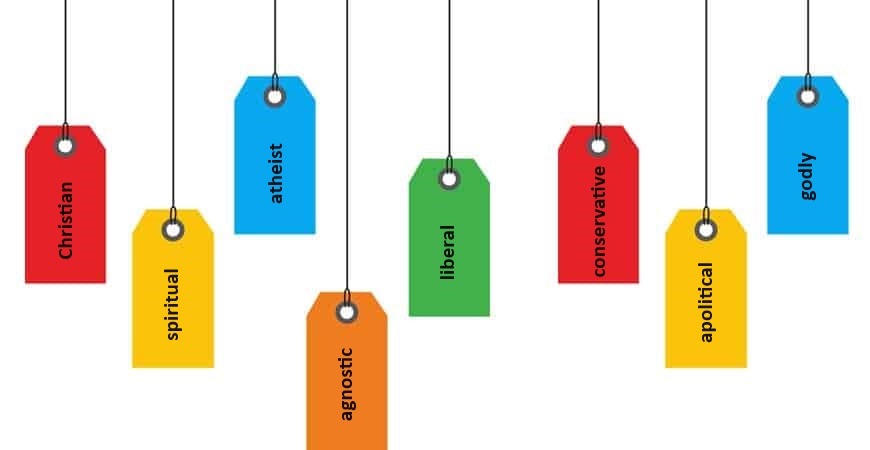
For example, what does the label “spiritual” imply? Does it mean the person is a believer in God, in Christ, or in multiple deities? Therefore, what does the label “Christian” imply about a person and his or her life? What about “godly?” This week we’ll look at what should be the differences between a “godly” and an “ungodly” lifestyle.
Lesson 12 – August 18 – Upright and Godly
Godliness as defined in the Bible may be in direct contrast to cultural behavior or societal mores, but we should strive to live our lives in a way that pleases God, not our peers.
“Let us follow in Jesus’ footsteps. Let people say whatever evil they want to, about us. If we honor God, He will one day honor us.” Do we care enough about God to honor Him and ignore what other people say about us? What would following the footsteps of Jesus look like in our everyday lives? —Indian pastor and teacher Zac Poonen
A Call to Godliness amid Ungodly Influences
Historically, Cretans were entrenched in the influence of Greek mythology, believing that their gods were mortal men and women who reached the status of deity by bestowing gifts and service to mankind. The character of these “gods” was immoral, unethical, and selfish. Cretans emulated that behavior in their daily lives and were known for sexual promiscuity, hedonism, and dishonesty. Paul’s letter to Titus tackled issues that arose from mixing old ideologies the truth of the Gospel. Christianity teaches that Christ is God, who came to earth as a man to save His people (Titus 1:3; 2:10). The Christian God is righteous and cannot lie (Titus 1:2). God the Father and God the Son call people to depart from evil to pursue godliness. However, the Cretan Christians were setting such a poor example of Christlikeness that unbelievers were hard-pressed to find a reason to convert.
It’s easy to draw parallels between the ancient Cretan culture and our modern, secular, humanistic one. We live in a society greatly influenced by media, a mixture of world religions, technology, and more. Sexual promiscuity is culturally accepted, violence is normalized in television and movies, and self-indulgence is glorified. Paul’s admonitions to Titus can be applied to the Christian church today. Amid so much worldly influence, it is important that we lead lives which emulate godliness. We serve a God worth imitating! If we act as those who don’t know God or who have rejected the Word of God, how can we hope to draw others to Christ?
Christ-righteousness Comes by Faith
W. Ian Thomas, an evangelist, Christian writer, and founder of the Torchbearers Bible schools, once said, “For godliness is not the consequence of your capacity to imitate God, but the consequence of His capacity to reproduce Himself in you; not self-righteousness, but Christ-righteousness; the righteousness which is by faith.”
What is godly in your life? What is ungodly? Go to God in prayer and in faith, asking for His power to help you change what is ungodly into behavior that honors Him.
Week of August 5 through August 11
Something to think about this week: As God’s child, what are three things He has done for you?
DAILY BIBLE READINGS
Mon. – 2 Corinthians 5:16-21 – The Love of Christ Compels Us.
Tues. – Deuteronomy 6:4-13 – Love the Lord Your God.
Wed. – James 2:8-13 – Fulfill the Royal Law of Love.
Thurs. – John 13:31-35 – Love One Another.
Fri. – Zephaniah 3:14-20 – Renewed in Love.
Sat. – Jeremiah 31:1-9 – An Everlasting Love.
Sun. – 1 John 3:1-10 – God’s Beloved Children.
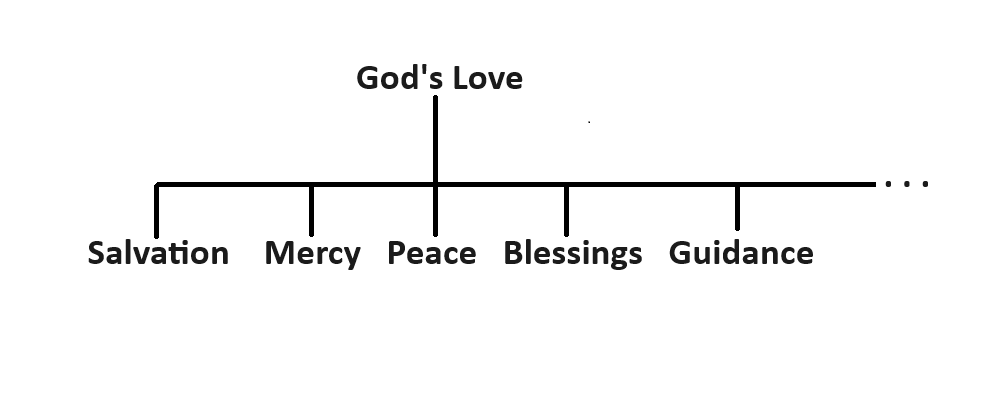
Walking in what is right simply means obeying God daily in our lives.
We walk in what is right because of our love for God and all that He has done for us. It’s not easy to walk in what is right, but it’s possible as we daily depend on the Holy Spirit to guide us the right way.
God’s Word teaches us the importance of knowing who we are and how we should live as God’s children.
Lesson 11 – August 11 – Christ’s Love as the Rule
Walking Rightly
Proverbs 3:5-6 makes it clear what walking rightly with God involves: “Trust in the LORD with all your heart and lean not on your own understanding; in all your ways submit to him, and he will make your paths straight.”
Only as we grow in our relationship with God will we know how to walk rightly as His children. God directs and enables us to walk rightly in our daily lives.
Walking with God
How do we walk right with God? Micah 6:8 tells us. First, our daily actions should be just, making decisions with fairness and loving others as we love ourselves. Secondly, we love mercy, as demonstrated by our unconditional love, forgiveness, and compassion for others, even those who don’t deserve mercy. Finally, we walk humbly with God in daily communication with our Father through prayer, meditation and reading His Word to know how to walk rightly. Walking right is a choice. Walking right is an expression of gratitude for all that God has done for you.
Week of July 29 through August 4
Something to think about this week: Your definition of fellowship.
DAILY BIBLE READINGS
Mon. – 1 Thessalonians 4:13-18 – Promise of Hope.
Tues. – Hebrews 10:19-25 – Encourage One Another.
Wed. – 2 Chronicles 30:21-27 – A Joyous Celebration.
Thurs. – Ecclesiastes 4:7-12 – Two Are Better Than One.
Fri. – Galatians 6:1-10 – Bear One Another’s Burdens.
Sat. – Psalm 121 – My Help Comes from the Lord.
Sun. – 1 Thessalonians 2:13-3:5 – Encouraged in Faith.

Lesson 10 – August 4 – The Fellowship of Encouragement
or as someone once said, “There ain’t no ship like the fellow-ship.”
Too often we feel we have to endure the struggles of life alone. We don’t want to bother anyone; we don’t want to be the talk of the town. But Galatians 6:2 says, “Carry each other’s burdens, and in this way you will fulfill the law of Christ.” Being in a true fellowship of believers like the Thessalonians had, can help us weather the storms that come and go in our lives.
Support Groups Encourage
The poet and pastor John Donne famously said, “No man is an island.” No one needs to stand alone if Christian fellowship and support are available. We need each other in the good times and the rough times.
Access to Christian support groups is essential for those facing life’s troubles. Those burdens might be a recent divorce, recovery from drug-abuse, struggles with single-parenting, death of a loved one, mental illness, or being a victim of violence, to name only a few. Our hurdles are often unexpected and leave a person feeling alone, hopeless, and helpless. Support groups counter those feelings with hope and answers. As Scripture says “Though one may be overpowered, two can defend themselves. A cord of three strands is not quickly broken” (Eccl. 4:12).
Christian support groups lift up the broken-hearted, putting them in a room with others in similar situations. They provide space for sharing and growth. Support groups are for encouraging, admonishing, comforting, and assisting one another.
Believers are told to encourage one another in Scripture. First Thessalonians 5:11 says, “Therefore encourage one another and build each other up, just as in fact you are doing.” Hebrews 10:24-25 adds, “And let us consider how we may spur one another on toward love and good deeds, not giving up meeting together, as some are in the habit of doing, but encouraging one another—and all the more as you see the Day approaching.”
We are absolutely, unequivocally, better together as a church family. We need one another!
Week of July 22 through July 28
Something to think about this week: God’s unfailing love.
DAILY BIBLE READINGS
Mon. – 2 Peter 1:16-21 – Await the Dawning Day.
Tues. – 2 Peter 3:1-15a – Hasten God’s New Creation.
Wed. – Psalm 59:1-9, 17 – God Is My Fortress.
Thurs. – Matthew 25:1-13 – Watch and Be Ready.
Fri. – Matthew 25:14-21, 24-30 – Watch and Work Faithfully.
Sat. – Lamentations 3:25-36 – Wait for God’s Salvation.
Sun. – Psalm 130 – Wait and Hope in the Lord.

This week’s lesson shows, we often wait for God to do something but become impatient when He doesn’t seem to be answering our prayers.
Lesson 09 – July 28 – Expectant Watchfulness
The Cook Who Didn’t Give Up
In 2013, Harrison Okene was working as a cook on a tugboat that was transporting oil off the coast of Nigeria when the boat suddenly capsized and sank to the ocean floor, upside down, 100 feet below the surface. Okene managed to keep his head above water in an air pocket, praying and reciting psalms his wife had texted to him on the phone the night before. Rough seas caused divers to wait three days before they reached the boat. Shocked, the divers heard his tapping on the hull and rescued him.
And what did Okene decide to do with his second lease on life? He overcame his terror of the water and got his certification as a diver, receiving his certificate from one of his rescuers!
Hope from the Abyss
In today’s Scripture, the psalmist is in a place of deepest darkness: “the depths”—a place of no light, no rescue, no hope. And yet, even in that lost and hopeless abyss, the psalmist remembers the love and mercy of God and cries out, trusting, hoping against hope that the Lord will hear and have mercy on him. And he has good reason for that hope, because this has been Israel’s experience and his own experience with God in the past. In fact, he is so sure of this hope, he calls on his people Israel to put their hope in the Lord and call out to Him as well. Even though he has not yet been rescued, he is as confident in God’s salvation as a night watchman is confident that the sun will rise in the morning.
The psalmist illustrates for us how we can feel two things at the same time that seem contradictory. The situation looks hopeless, yet he has hope. He seems defeated, yet he tells Israel how to be victorious. This is a great illustration for us of the fact that we can choose what our response will be to life situations, rather than reacting instinctively to the way things appear on the surface. Even when all the evidence says we’re defeated, Hebrews 11:1 reminds us, “Faith is the substance of things hoped for, the evidence of things not seen” (KJV). So we have a choice to respond to the curveballs of life as people who see only through their physical eyes or as people who see with the eyes of faith. People who see faults and limitations, or people who see successes and possibilities. Which will you choose?
Week of July 15 through July 21
Something to think about this week: Things that bring you joy.
DAILY BIBLE READINGS
Mon. – 2 Timothy 3:10-17 – Equipped for Every Good Work.
Tues. – Matthew 4:1-11 – Resist Temptation.
Wed. – Proverbs 30:1-9 – Every Word of God Proves True.
Thurs. – Colossians 3:12-17 – Let Christ’s Word Abound in You.
Fri. – James 1:19-27 – Doers of the Word.
Sat. – Psalm 119:57-72 – Lord, Teach Me Your Statutes.
Sun. – Psalm 119:73-80 – Hope in God’s Word.

There are few passages in Scripture that provide greater insight into biblical meditation and the blessings that come with it than Psalm 1. Instead of consorting with ungodly sinners who scorn the ways of God, the blessed person delights in God’s commands and meditates on them. And such meditation is not a once-in-awhile affair. Rather, it is frequently, throughout the day and night. The Hebrew for meditation here, haga, includes the ideas of pondering, studying, and even talking about it.
The more we ponder, study, and talk about God’s Word, especially to Him in prayer, the more blessed our lives are and the stronger we will stand for Him. The picture given in Psalm 1 is a tree that is planted by a river. With an abundant source of water, a tree will thrive and be fruitful.
The same happens to those who meditate on God’s commands. They will stand and bear the fruit of righteousness. And with roots sunk deep into the Word of God, they will continue to stand even during times of spiritual drought.
Lesson 08 – July 21 – Delightful Precepts
Psalm 119:73-74 begins with the psalmist acknowledging a foundational truth; namely, that our God is our Creator. He created the heavens, the earth, and everything therein, including people. Several places in Scripture proclaim that God also forms people in the wombs of their mothers. As David proclaimed of the Lord, “For you created my inmost being; you knit me together in my mother’s womb. I praise you because I am fearfully and wonderfully made; your works are wonderful, I know that full well” (Ps. 139:13-14).
When we behold the beauty of the night sky, we can see how clearly it declares the glory of the Lord (Ps. 19:1). And the same is true when we look upon a newborn baby.
Along with marveling at the glories of our Creator, we can trust that He wants to communicate with us, as well. Over millennia, God has given His Word, the Old and New Testaments, to teach us how to have a relationship with Him and help us to understand how to please Him by keeping His commands. And, He has given us His Spirit to guide us in that understanding.
Furthermore, we can know that there is great reason to rejoice for those who fear the Lord and put their hope in His Word. It is strange to think of fear as a companion of rejoicing and hope, but such is the case when our fear is in the Lord. As Scripture says, “Serve the LORD with fear, and rejoice with trembling” (Ps. 2:11, KJV). When we truly consider from His Word how mighty and majestic God is, we rightly understand how feeble we are in comparison. And that knowledge gives us hope that no matter the circumstance or trial, God is more than able to see us through it.
It takes spiritual maturity to appreciate afflictions that God allows into our lives. Most people do not normally ask to be “afflicted” (Ps 119:75), but the wise person will recognize the value of it for good. The Hebrew for “afflicted,” also conveys the idea of chastisement or humbling. And though it may seem harsh for a time, there is also a gentle aspect about it. In other words, affliction or chastisement from God is not out of anger or wrath, but rather from the heart of a loving Father. As Proverbs 3:11-12 admonishes, “My son, do not despise the Lord’s discipline, and do not resent his rebuke, because the Lord disciplines those he loves, as a father the son he delights in.”
We too can accept afflictions from the Lord, not only because of His love, but also because we know His laws and commands are truly “righteous” (vs. 75). Our God deals with us rightly; and when we follow His commands, we will stay on His righteous path. Furthermore, we can take comfort in His unfailing mercy and kindness toward us. And most comforting of all is the knowledge that God keeps His promises, for it is not possible for God to lie.
Additionally, we can find “compassion” (vs. 77) and life in God’s tender mercy and His Word. Jesus said, “Very truly I tell you, whoever hears my word and believes him who sent me has eternal life” (John 5:24). Likewise, Paul referred to the need to hold fast to the word of life (Phil. 2:16). No wonder the psalmist spoke of delighting in God’s law, His Word, for by His mercy it is our very life.
God cares when others in pride and arrogance mistreat His people, and we can be sure that He will deal with them effectively and justly. In fact, how others treat the Lord’s people will be a primary consideration when He returns in judgment. Feeding, clothing, and otherwise ministering to the Lord’s people are indicators of righteousness, and failure to do so indicates just the opposite (see Matt. 25:31-46). In God’s sovereign time, evil people who treat others with contempt will not escape shame and judgment. There is nothing hidden from God’s attention.
In stark contrast to the perverse, arrogant person, when God’s people “meditate” (vs. 78) on His precepts, holy fear and reverence will come upon them; and they will seek to do His will. And key to doing God’s will is to “understand” (vs. 79). Godly fear and true understanding of the Lord’s statutes go hand in hand. To have a right view of God’s Word, we need to have a right view of God Himself. When we have a right view of God, we will present ourselves to Him as living, holy, and acceptable sacrifices, not conformed to this evil age, but transformed with minds renewed by the Word and Spirit. Then will come deeper understanding of God’s good and perfect will for our lives (see Rom. 12:1-2).
Another key to standing unashamed before the Lord is “wholeheartedly” (vs. 80) following His decrees. The idea here is having a heart that is strong and sound for the Lord. It speaks of a pure, stout heart for the things and ways of God. When we approach decrees and statutes with a whole heart that is pure in His eyes, we will have no reason to be ashamed. When we consider God’s faithfulness and unfailing love for us, how could we do anything but delight in His commands? There is joy in keeping and heeding the Word of God, for it gives life to those who respond to it in faith, both in this generation and those to come!
Week of July 8 through July 14
Something to think about this week: Future generations.
DAILY BIBLE READINGS
Mon. – 2 Corinthians 2:12-17 – The Fragrance of Knowing God.
Tues. – Psalm 107:1-9 – The Testimony of the Redeemed.
Wed. – Psalm 107:10-22 – Sing of God’s Deeds with Joy.
Thurs. – Colossians 1:3-12 – Hope Laid Up in Heaven.
Fri. – Ephesians 3:1-13 – Proclaim Christ’s Boundless Riches.
Sat. – Psalm 71:1-11 – Refuge in the Lord.
Sun. – Psalm 71:12-21 – Hope and Praise Continually.

We who love the Lord can and should nurture that “hope in the Lord” in our young people. To see them “soar on wings like eagles” and “run and not grow weary” and “walk and not be faint” should inspire each of us to tell them about Jesus’ love and compassion for them and how He atoned for their sins and redeemed them for God’s heavenly kingdom.
Lesson 07 – July 14 – Continual Proclamation
When Paul and Barnabas went on their first missionary journey together, others accompanied them, including Barnabas’s young cousin, John Mark. For whatever reason, Paul did not want Mark to join them on their next mission, which caused such a sharp dispute between Paul and Barnabas that the two men split from each other (see Acts 15:36-41). Many years later, Paul and Mark must have reconciled, for while he was in prison, he told Timothy to “get Mark and bring him with you, because he is helpful to me in my ministry” (2 Tim. 4:11).
Thankfully, the senior Paul did not give up on his younger colleague in their ministry for Jesus. John Mark went on to serve the Lord in many significant ways, likely including the writing of the second Gospel. Paul’s patience, forgiveness, and self-reflection regarding Mark probably helped him in being a mentor to Timothy. Jesus Himself viewed younger people with deep affection when He said to His followers, “Let the little children come to me, and do not hinder them, for the kingdom of God belongs to such as these” (Mark 10:14).
Enlightening Future Generations
In Psalm 71, the psalmist seeks the aid of God both for himself against his enemies and for future generations to whom he vows to proclaim the marvelous awesomeness of the Lord. It is a declaration of hope that can be realized only in the Lord God, and it’s a message He calls us to teach to future generations about the hope we have in Christ.
Current believers’ faith does not determine future believers’ faith. God can impact people’s hearts in any number of ways. Nevertheless, we are important vessels of the Lord, and when He calls us to act and speak for Him, we must obey and obey with joy in our hearts and the utmost commitment. To do otherwise would not please our Lord, and to please God should always be imperative in all that we do.
Week of July 1 through July 7
Something to think about this week: Issues that cause people to have despair in their lives.
DAILY BIBLE READINGS
Mon. – Matthew 6:9-15 – Our Father in Heaven.
Tues. – Jeremiah 52:1-15 – Judah’s Fate Sealed.
Wed. – Jeremiah 52:16-30 – God’s People Face Exile.
Thurs. – Hebrews 4:12-16 – Boldly Approach the Throne of Grace.
Fri. – Hebrews 8:6-13 – God Will Remember Sins No More.
Sat. – Psalm 30 – Joy Comes with the Morning.
Sun. – Lamentations 3:16-24 – Hope in God’s Steadfast Love.

The prophet Jeremiah lamented the destruction of Jerusalem and the devastation of God’s people. Although he understood that the rebellion of the people was responsible for God’s judgment, nevertheless, he was also confident in God’s loving compassion. So, he presented his despair to the Lord, just as we should do, being confident that He is always faithful and able to handle our own personal despair.
Lesson 06 – July 7 – Ceaseless Love
Clinging to God
When the prophet Jeremiah saw, the ruins of the holy city of Jerusalem, he clung to the Lord. When he saw God’s people slain and cast into bondage, he clung to the Lord. When he himself was scorned and mistreated, he still clung to the Lord his God. Truly, Jeremiah is an exceptional model for each believer in Christ.
Adversity comes to all of us. As surely as there is evil in the world, our faith in Christ will be challenged. It may be subtle and unexpected, such as someone sideswiping us while we are driving; or it may be catastrophic, such as the prolonged death of a loved one. No matter the situation or the circumstances, we must cling to God’s love and faithfulness if God’s promises to us will ever have any enduring meaning for us.
When Joshua gave his farewell speech to the leaders of Israel, he exhorted them to “hold fast to the LORD your God” (Josh. 23:8). And when the psalmist needed the Lord, he declared, “I cling to you; your right hand upholds me” (Ps. 63:8).
Why did Joshua exhort God’s people to cling to God, and why did the psalmist declare his clinging to God? Both knew the character of the Lord that He is a merciful and loving God, that He is faithful to His promises, that He is steady and unchanging and always able to uphold us.
Therefore, take your despair and all your other burdens to the Lord and cling to Him, for He can handle it: “Come to me, all you who are weary and burdened, and I will give you rest,” Jesus says to each one of us. “Take my yoke upon you and learn from me, for I am gentle and humble in heart, and you will find rest for your souls. For my yoke is easy and my burden is light” (Matt. 11:28-30).
We don’t have to be amid despair to know how it can cripple our lives. All of us at one time or another have experienced how being stuck in its shadow can rob us of living a joyful and hopeful life. Caught in its grip, however, does not have to be an ongoing reality for followers of Christ. God can and will liberate us when we turn it over to Him, for He is always faithful in His mercy and is always able to help us overcome it.
Week of June 24 through June 30
Something to think about this week: What you see in our world that demonstrates our need for hope in Christ.
DAILY BIBLE READINGS
Mon. – Psalm 27 – My Heart Shall Not Fear.
Tues. – Philippians 3:1-14 – The Treasure of Knowing Christ.
Wed. – Galatians 1:13-24 – Jesus Makes a Difference.
Thurs. – Isaiah 41:1-15 – God Will Help the Fearful.
Fri. – Daniel 12 – The Wise Shall Shine Brightly.
Sat. – Acts 9:1-9 – Encounter with Christ.
Sun. – Acts 26:1-11 – An Apostle’s Defense.

Remember that special feeling when your friend chose you to be on his sport team? We need to experience that same special feeling about being chosen to testify of our hope in Christ. John 15:16 says, “You did not choose me, but I chose you and appointed you so that you might go and bear fruit.” Jesus reminds us in this verse that He chose us to go into the world and testify of our hope in Him. It is not of our choosing or optional. Jesus chose us to take every opportunity given to testify of our hope in Him.
Lesson 05 – June 30 – Fearless Witness
Hopelessness
Hopelessness consumes many hearts. When I read the news, I feel it. Families mourn after a mass shooting, communities are torn apart by gang warfare, and people in extreme poverty struggle to afford the necessities of life.
“You look dejected,” my husband said as I returned home from a frustrating day of work. I felt dejected too. With a smile, he reminded me that Christ can give me hope, no matter what I face in life. I thanked him for his encouragement. I didn’t know how to make sense of what I was feeling.
As I laid in bed that night, I prayed that God would remind me of hope. I have hope because of Christ’s life, death, and resurrection. It occurred to me that Jesus came to a world that wasn’t perfect, a world that had its share of problems—like mine. I realized that Jesus had experienced the same frustrations as I. He was surrounded by illness and poverty, by greed and brutality. He faced real evil, and He overcame it. Somehow I slept more peacefully at that thought.
The next day, nothing had really changed in the world—except me. No longer did I dwell on the evil I don’t control. I lived in the hope that Christ gives. I trust that, even when I don’t see, God is at work in this world. He is in control.
It’s difficult to have hope when we look at our realities. Yet as we learn to refocus our gaze away from the world’s hopelessness and onto the face of Christ, we find a God who is with us. Our hope in God can look naive or foolish to outsiders, but we know that God is not sleeping or disinterested. God wants to fill our hearts with peace rather than hopelessness. He is Sovereign. Christ will reign as king until the memories of pain and evil have utterly fled.
The world seems hopeless because people are always searching for hope in the wrong places. We should be the ones who offer hope to those we meet—not a hope that ignores the world and says everything will be fine, but a hope that Jesus will work through us to bring His kingdom on this earth, one person at a time. Anyone who knows Him personally can share how He has changed their perspective on life to hopefulness, rather than hopelessness.
Week of June 17 through June 23
Something to think about this week: Your definition of the word “diligence.”
DAILY BIBLE READINGS
Mon. – Psalm 42 – Hope in God Our Help.
Tues. – 1 John 5:1-13 – Whoever Has the Son Has Life.
Wed. – 1 John 5:14-21 – Boldness in Christ.
Thurs. – Psalm 23 – The Lord Is My Shepherd.
Fri. – Isaiah 12 – Trust in God Our Salvation.
Sat. – Hebrews 6:1-8 – Maturing in Christ.
Sun. – Hebrews 6:9-20 – Trust God’s Promises.
The Model of Abraham
For encouragement, the author of Hebrews holds up the model of Abraham as one who maintained faith in God’s promise despite the Old Testament evidence of the many times Abraham expressed his doubt.
The characteristic associated with Abraham’s faith is patient endurance. By “patiently endur[ing], he obtained the promise” (vs. 15, KJV). Another translation for “patiently enduring” is “persevering.” As commentator Craig Koester notes,” ‘persevering’ is the shape that life takes in between the giving and fulfillment of God’s promise.” Abraham “obtained the promise” (KJV) in the birth of his son Isaac. Much of Christian tradition sees Isaac (particularly his role as the only son who is to be sacrificed) as a forerunner of Christ, the ultimate fulfillment of the promise made to Abraham.
Lesson 04 – June 23 – Full Assurance
Back Against the Wall
My husband and I were expecting our first child. I was very pregnant when without warning, my husband—Bruce couldn’t walk. His back was causing debilitating pain, and suddenly he was immobile! When I say immobile, I mean he couldn’t shower, dress, sit, or do anything. The pain became slightly tolerable if he laid in a very specific position. You can imagine the effect this had on us.
Bruce couldn’t work anymore, and his job was our only income. We had bills, and we didn’t know how long our savings would last. Would this injury resolve itself? I was in my third trimester; I was in no condition to look for a job—not to mention, I couldn’t leave Bruce alone if he couldn’t do anything. I was his nurse around the clock.
We tried anything to get him relief—physical therapy, a chiropractor, endless doctor appointments, specialists. It felt like a never-ending cycle. Days turned to weeks and months. He was still bedridden and in unbelievable pain.
And yet, I’ve never felt more seen by God. He showed up when people provided meals, when pastors came to pray, and when we stretched our dollars to make ends meet. Total strangers gave us money. There were people getting us in to see different doctors to try new treatments. We felt care and love like never before. We never missed a payment. Finally, after nearly four months of pain, Bruce had spinal surgery and felt relief.
Our house, our marriage, our new baby girl—all of these would have been impacted without the grace of God during such an ordeal. God gets the glory for the faithfulness He showed, never leaving or forsaking us.
All throughout Scripture, there are examples of God keeping His promises. Everything God said to the Israelites in the Bible was true for them, and it’s also true for us still today. His Word is the same yesterday, today, and forever, which means His promises have no expiration date.

Happy Father’s Day! If you fathers need a new Dad joke……………..
“What did the beach say when the tide came in?” -Long time, no sea.
“Why should you not use an unsharpened pencil?” –It’s pointless.
“Why did the old man fall down the well?” -He couldn’t see that well.
Week of June 10 through June 16
Something to think about this week: Things you have “accepted” over the years that have been beneficial to you. For example, you may have resisted using a cell phone, but now you don’t know how you managed without one for so long.
DAILY BIBLE READINGS
Mon. – Luke 22:25-30 – Servant Leadership.
Tues. – Acts 1:1-11 – You Shall Receive Power.
Wed. – Isaiah 61 – Anointed by God.
Thurs. – Psalms 133-134 – How Pleasant to Live in Unity.
Fri. – Ephesians 4:1-7 – Bear with One Another in Love.
Sat. – Philippians 2:1-13 – Embrace the Mind of Christ.
Sun. – Romans 15:1-13 – Prayer for Hope, Joy, and Peace.

An election campaign politician visits a small town and asks the mayor what problems do they have. He replies that they have two problems. The first one is that they have a hospital but they don’t have a doctor.
The politician takes out his mobile phone, makes a call and discusses for a while on the phone, to finally tell the mayor:
Your problem is already solved. Tomorrow morning a doctor will come to your town. What is the second problem?
We don’t have mobile phone coverage – replies the mayor.
Lesson 03 – June 16 – Empowered Servants
In Romans 14 and 15, Paul addressed a relevant issue to the churches in Rome: the relationship between Jewish and Gentile believers in the church. Many Jewish Christians were continuing to observe the law of Moses along with an assortment of cherished traditions.
Paul’s said there was nothing wrong with continuing to observe Jewish dietary and festival laws. However, one group cannot compel all Christians to adopt Jewish conventions and ceremonies. He tried to settle the issue in a way that would be amicable to both sides and preserve the unity of the churches.
Specifically, Paul urged the weak in faith not to censure other Christians who did not abide by their dietary restrictions. Also, he cautioned the strong in faith not to look down on believers who felt obligated to observe Jewish customs (14:3). The most important matter was for each group to welcome and love the other unconditionally. Moreover, they were to avoid causing others to stumble, to aim for harmony in the church.
Believers are designed to rely on one another, but too often we take this action for granted or don’t realize just how important it is. The will of God in this world can’t be accomplished by one individual; it takes the entire Body of Christ to spread His message and love.
Newer believers are weaker, but not in a physical sense. They don’t have as much knowledge and experience in the faith as a more mature believer. Therefore, it falls upon the shoulders of the mature believer to encourage others when they are struggling, slipping back into old habits, or doubting their new faith.
New believers may feel completely overwhelmed by everything they don’t know. They may think they’re not good enough to participate in a Bible study or small group alongside believers who have followed Christ for decades. They may be tempted to go back to what was familiar and comfortable. This is where the strong believers need to step in and say, “You can do this! Jesus loves you, and I’m here to help.”
Week of June 3 through June 9
Something to think about this week: Images that come to mind when you hear the word “freedom.”
DAILY BIBLE READINGS
Mon. – Acts 28:23-31 – Boldly Proclaiming the Kingdom.
Tues. – Exodus 19:9-11, 16-25 – The Awesome Presence of God.
Wed. – Hebrews 12:18-29 – The Consuming Fire.
Thurs. – Acts 4:23-31 – The Church Prays for Boldness.
Fri. – Exodus 34:28-35 – Transfigured by the Power of God.
Sat. – Deuteronomy 31:1-8 – Be Strong and Courageous.
Sun. – 2 Corinthians 3:5-18 – Ministers of a New Covenant.

Lesson 02 – June 9 – Bold Ministers
 Eight-year-old Sarah loved her summer week visit to her grandparents’ farm. She thoroughly enjoyed feeding the barn animals, picking vegetables from the garden, collecting wildflowers growing in the pasture, and working alongside her grandmother in the kitchen.
She loved each day at her grandparents’ house except one: Sunday. She didn’t like the day her grandparents strictly held as “the Lord’s Day.” To Sarah, it seemed a long and dreary and boring day. On Sundays, she was made to wear an itchy, uncomfortable dress—what her grandparents called her “Sunday best”—not only to church but for the rest of the day. She was told that Sunday was to be a day of solemn quietness, that she wasn’t to run or play or swing at all, that the Bible was the only book she could read, that she couldn’t pick wildflowers. She wasn’t even allowed to accompany her grandfather when he fed the animals.
Late on Sunday afternoon while her grandfather took a nap, she asked her grandmother if she could at least take a walk to the pasture gate. Begrudgingly permitted to do so, she stopped to look at the old mule as he stood motionless with his head bowed and his eyes closed. Reaching through the fence rails, she said, “Poor fellow, have you got religion too?”
Legalism has a way of dulling our minds to the Lord’s glory—and to His love, grace, and joy. But Paul wrote, “Where the Spirit of the Lord is, there is freedom” (2 Cor. 3:17).
His Word on Our Hearts
While God gave the commandments on tablets of stone to His people on Mount Sinai, His plan all along was to write His law on their hearts, so His people would have a closer relationship with Him and know Him (Jer. 31:31-34). All people are offered a personal relationship with the living God. The Creator of the universe has made a way.
In biblical times, a covenant relationship involved responsibility and an outpouring of love. God’s new covenant agreement—an offer of grace through Jesus’ death and resurrection—provided a way for imperfect people to keep the covenant. Paul placed his trust and assurance as an apostle of the Gospel message solely on God’s strength. Any confidence in our ability to hold up our end of the covenant relationship is found through faith and trust in Jesus alone for righteousness before God.
Paul contrasted the old covenant of the law with the new covenant of grace to show the role of the Spirit in believers’ lives. When we trust Jesus in faith that He is God’s Messiah, the Spirit transforms our hearts and minds. The veil is lifted and we are able to behold and reflect God’s glory in our lives—with the Spirit’s help. Jesus emphasized we are not to cover or hide (as with a veil) God’s work in our lives (Matt. 5:14-16). Rather, as we accept God’s gift of grace and a life of freedom in the Spirit, we are to reflect Christ and His love to those around us.
People who claim to be followers of the Lord without submitting to His will are only fooling themselves. Those who truly belong to the Lord are transformed so others will see Christ at work in their lives.
Week of May 27 through June 2
Something to think about this week: The last person who encouraged you or you encouraged.
DAILY BIBLE READINGS
Mon. – Isaiah 43:8-13 – God’s Witnesses.
Tues. – Psalm 113 – Praise the Lord!
Wed. – Galatians 3:19-29 – God’s Children Through Faith.
Thurs. – Proverbs 10:19-25 – The Lord’s Blessing Makes Rich.
Fri. – Matthew 6:19-24 – Your Treasure Is with Your Heart.
Sat. – Matthew 6:25-34 – Seek First God’s Kingdom.
Sun. – Colossians 1:24-2:3 – Christ, the Most Precious Gift.

How do trees encourage one another?
They say “I’m rooting for you”
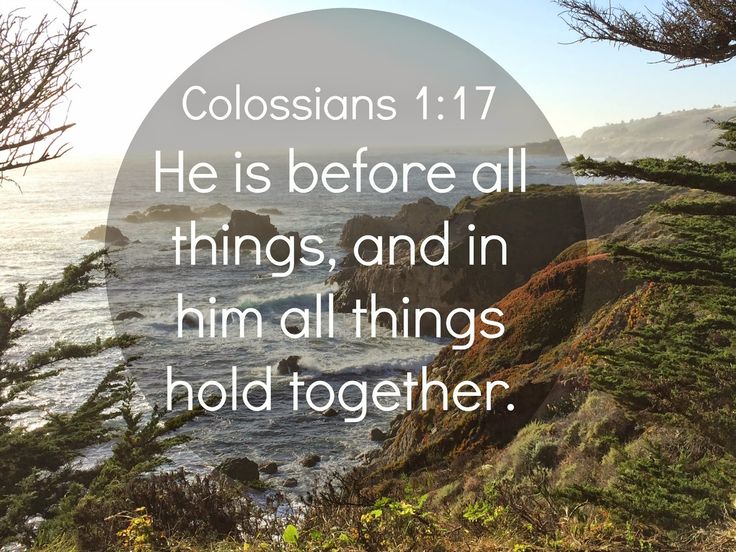
Lesson 01 – June 2 – Glorious Riches
At the time Paul wrote to the Colossians, people in Asia Minor (now modern-day Turkey) were mostly polytheists that is, believers in many different gods. Some worshiped the traditional Greek gods like Zeus and Athena. Others placed trust in Roman gods, Egyptian gods, Persian gods, or a mixture of from different cultures. There were several different ways that people could express honor to their gods. Some people might quietly offer incense each morning at a household altar. Others might join wild parties in the streets. Some people were concerned about participating in the “correct” ceremonies and following various rules. They might join themselves to leaders of religious and philosophical movements who claimed to have divine knowledge and wisdom. Paul’s letter to the Colossians speaks to this context. Jesus is not just the revelation of the only true God; Jesus is Himself the source of all true wisdom. God’s wisdom was not meant to be hoarded, but rather, proclaimed as good and hopeful news for all people!
The Gospel message reveals God’s mystery—that Christ now lives and reigns in the hearts of believers, giving hope of future glory with Him. We each have opportunities to share this hope in God’s power and His strength. As we seek to understand God’s purposes and know Him more, He will show us the truth of the Gospel and how to live out that truth in our lives.
 Bethel Cumberland Presbyterian Church