Week of November 18 through November 24
Something to think about this week: Something that awes you, such as a sunset or a thunderstorm.
DAILY BIBLE READINGS
Mon. – Matthew 1:18-23 – God Is with Us through Christ.
Tue. – Exodus 33:12-23 – My Presence Will Go with You.
Wed. – Exodus 34:1-9 – A Glimpse of the Merciful God.
Thu. – Psalm 16 – Complete Joy in God’s Presence.
Fri. – Matthew 18:15-20 – Where Two or Three Are Gathered.
Sat. – Matthew 28:16-20 – I Am with You Always.
Sun. – Psalm 139:1-12 – God Searches and Knows Us.

God knows creation. He is ever-present. It is glorious. It is magnificent. It is epic. Human beings are limited in their power and their wisdom. It takes faith to trust in the God you cannot see. Jesus said of Thomas, “Thomas, because thou hast seen me, thou hast believed: blessed are they that have not seen, and yet have believed” (John 20:29 KJV).
Lesson 13 – November 24 – God’s Promised Presence
Here l Am, Ready or Not
Remember playing hide-and-seek when you were a kid? Whoever was “it” had to close his or her eyes and count to whatever the agreed-upon number was while everyone else hid.
How do you feel about God being “it” and knowing where you are at every moment, even if you might be trying to hide from Him? Is that comforting—or unnerving?
Today you’ll be studying Psalm 139, which talks about God’s complete knowledge of us, including when we sit or stand, what we say, and even what we think. The writer describes multiple places as if they were ways to escape God’s presence. He uses these examples to explain that it is impossible to run or hide from the all-knowing God.
That is comforting to me. I know I sin and, honestly, I would rather God look the other way when I do. But I also know that in His mercy, He has promised to forgive me. It’s comforting that He is with me 24/7, wherever I go. Whether I’m pleading with Him while lying in a hospital bed, or not thinking about Him as I’m vacationing on a sandy beach, He’s still with me. Always.
“For your ways are in full view of the LORD, and he examines all your paths” (Prov. 5:21). Jeremiah 23:24 says, “Who can hide in secret places so that I cannot see them?’ declares the LORD. ‘Do not I fill heaven and earth?’ declares the LORD.”
You Know Me
What an amazing feeling for someone to know you. If you are known, you do not have to explain your thoughts and actions or introduce yourself. You are comfortable and at peace. God knows us. He doesn’t need any introductions. We are so known to God that He knows every strand of hair on our head. “Indeed, the very hairs of your head are all numbered. Don’t be afraid; you are worth more than many sparrows” (Luke 12:7). You are worthy of being known.
There is good news! Tell the whole world about it! Forget the negativity you are hearing on social media, the news, the radio or even seeing in your own neighborhood or home. Ignore what the enemy is whispering in your ears about your life and destiny. You are chosen, loved, and cherished by your creator. He’s always present and always accounted for on your behalf. He takes you seriously, and your welfare is important. Remain in awe of this great love demonstrated by His presence.
Week of November 11 through November 17
Something to think about this week: What you have to be thankful for this Thanksgiving season.
DAILY BIBLE READINGS
Mon. – Psalm 28 – Give Thanks through Song.
Tue. – Ephesians 5:1-2, 15-20 – Psalms, Hymns, and Spiritual Songs.
Wed. – Psalm 69:1-6, 30-36 – Magnify God with Thanksgiving.
Thu. – Psalm 7:1-2, 6-17 – Give Thanks to the Righteous Judge.
Fri. – 1 Thessalonians 1 – Thanks for Faithful Brothers and Sisters.
Sat. – Philippians 4:4-9 – Prayer and Supplication with Thanksgiving.
Sun. – Psalm 100 – Worship the Lord with Gladness.

Lesson 12 – November 17 – A Song for Thanksgiving
A Song of Thanksgiving
Some business people were partying in a trendy Atlanta restaurant when an old Georgia farmer sauntered in for lunch.
When he received his meal, he bowed his head and quietly gave thanks to God for the food.
After the farmer had prayed, one of the partiers nearby taunted him: “Hey, old farmer, does everybody do that where you live?”
A lot of people try to spend a minute or two every day to give thanks. But so many—tragically—don’t know who to thank. They’re grateful that they have a house, a car, a job; that they don’t have any serious diseases; that they have more than enough food to eat; or that their ex-husband caught up on his alimony. Author Amy Morin in Psychology Today magazine wrote that there are “seven scientifically proven benefits of gratitude.” She said it helps deliver you from “toxic emotions” such as envy, resentment, and frustration. An “attitude of gratitude” will help you sleep better, improve your self-esteem, and cut down on your aches and pains. However, Morin never says to whom you direct all that life-improving gratefulness.
Believers know who to thank. Knowing their lives are gifts from God, they “come before him with joyful songs.” They “enter his gates with thanksgiving.” They launch into His presence and direct their gratitude to Him. And they’re glad to do so!
Romper Room Children’s Prayer
“God is great, God is good. Let us thank Him for our food. Amen.”
Week of November 4 through November 10
Something to think about this week: Things we would not thank God for.
DAILY BIBLE READINGS
Mon. – Revelation 19:1-10 – The Lord God Almighty Reigns.
Tue. – Psalm 147:1-6, 12-20 – How Good to Sing God’s Praises.
Wed. – Psalm 148 – Praise God from Heaven and Earth.
Thu. – Luke 1:46-55 – My Soul Magnifies the Lord.
Fri. – Luke 1:68-79 – Blessed Be the God of Israel.
Sat. – Psalm 146 – Praise the Lord, 0 My Soul!
Sun. – Psalms 149-150 – Let Everything that Breathes Praise God!
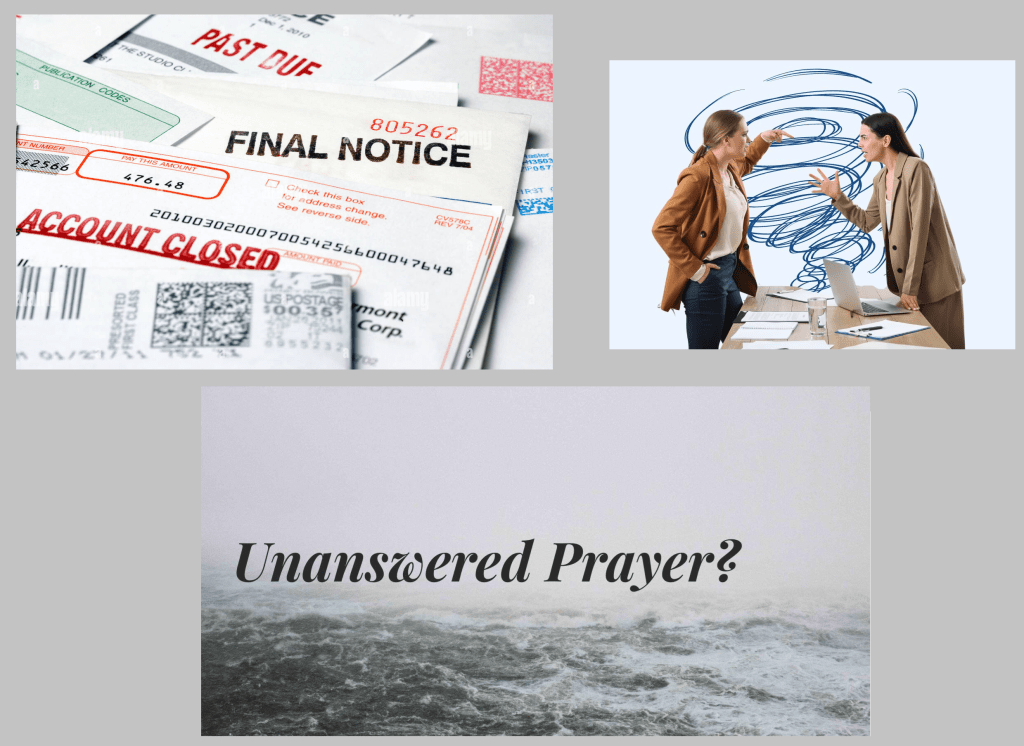
Lesson 11 – November 10 – Songs of Praise
Trust Him!
For as long as Kelly could remember, she has loved kids. When she was four years old, she would beg her mom to let her hold her baby brother. When she entered college, she’d tell her friends that all she wanted was to have kids someday.
But now, she was in her mid-40s. She was single, and had no kids of her own. She still did entry-level work in an office and as a coffee barista. And her “volunteer” work at church didn’t always feel voluntary.
For a long time, she resented God. She was disappointed in Him. Hadn’t she prayed for years to be a mother? Her prayers often seemed to be more in line with solemn laments than joyful worship.
Kelly confessed her pent up feelings to her friend Amanda over dinner one night.
“I’ve heard of a camp nearby that serves children in foster care. What if you tried that out this summer?” Amanda asked her friend.
Kelly was hesitant, but she agreed. When she began working at the camp, she praised God. She finally felt like she found her place. She could connect with the kids, love them, and teach them about Christ. She found some of her closest friends among her coworkers at the camp. She found people who shared her same love for children.
Kelly realized that God had given her a special love for children for a reason. Even though she never had kids of her own, she had dozens of kids to care for at the ministry.
We all struggle to trust God. Even David, who was in many desperate situations, did not abandon trust in the Lord. David praised God, even as the Lord chastised him. Sometimes we can be too close to a situation to see the praiseworthy good that can come out of it. God’s plans are beyond our understanding. Sometimes we may find ourselves frustrated with God when His plans don’t seem to answer our prayers.
If You Can’t Say Something Nice…
Did your mother ever say, “If you can’t say something nice, don’t say anything at all”? Does praise mean we always say only “nice” things to and about God? Many of the psalms express natural human emotions of confusion, fear, anger, and disappointment to and about God. But they go on to express faith in God—though things might seem hopeless, He will right every wrong.
Week of October 28 through November 3
Something to think about this week: Ponder on how God casts fear out of our lives.
DAILY BIBLE READINGS
Mon. – Ezekiel 34:1-6 – Sheep without a Shepherd.
Tue. – Ezekiel 34:7-16 – God Opposes Unfit Leaders.
Wed. – Ezekiel 34:17-31 – God Will Appoint a Shepherd.
Thu. – John 10:1-10 – The Good Shepherd Defends the Flock.
Fri. – John 10:11-18 – The Good Shepherd Gives His Life.
Sat. – Revelation 7:1-4, 9-17 – The Lamb Will Be Their Shepherd.
Sun. – Psalm 23 – The Lord Is My Shepherd.

Psalm 23:1 sums it up: “The LORD IS my shepherd, I lack nothing.” Everything we need is found in God. We can put our confidence in His shepherding because of His Word, His promises, and the stories throughout history when God has shown his faithfulness and mercy. Isaiah 41:10 makes an encouraging promise: “So do not fear, for I am with you; do not be dismayed, for I am your God. I will strengthen you and help you; I will uphold you with my righteous right hand.”
Lesson 10 – November 3 – Confidence in God’s Shepherding
God Protects Us amid All Kinds of Fears
People experience fears from all sorts of situations. Some fears might be phobias, like an intense fear of germs, snakes, or spiders. Other people might experience worry over whether or not they’ll be able to make their next set of bills. A person might experience debilitating fear over a bad diagnosis. Many people experience anxiety over public speaking, confrontation, or other uncomfortable situations. People who suffer from fear may feel that they are being tormented, and their joy has been stolen.
For chronic fear, some people are forced to turn to doctors and medication to alleviate anxiety. There are folks who may suffer fear and stress from situations in life that are terribly difficult to navigate. How do you cope with fear in a world where there are many real things to be afraid of?
One way is to remember the words voiced in 2 Timothy 1:7: “For God hath not given us the spirit of fear; but of power, and of love, and of a sound mind” (KJV). David feared for his very life, but he didn’t allow that fear to control his life. He cried out to God. He sang to God. He prayed to God. And he attested to the benefit of trusting God in the midst of his fears: “I sought the LORD, and he answered me; he delivered me from all my fears” (Ps. 34:4).
The best way to deal with fear is to present it to our loving Lord in prayer, believing that He is a loving good shepherd, who will take care of His sheep, no matter what circumstances we face.

Week of October 21 through October 27
Something to think about this week: The inner peace we enjoy in the Lord.
DAILY BIBLE READINGS
Mon. – Mark 9:14-27 – I Believe, Help My Unbelief!
Tue. – Psalm 28 – God Is My Strength and Shield.
Wed. – Proverbs 3:1-8, 13-14 – Trust God with All Your Heart.
Thu. – 1 John 4:4-13 – God in You Is Greater.
Fri. – 1 John 4:14-21 – Boldness on the Day of Judgment.
Sat. – Jeremiah 17:5-11 – Blessed Are Those Who Trust God.
Sun. – Psalm 62 – Wait upon God’s Salvation.
Psalm 62 Commentary
It doesn’t matter if you’re “lowborn” or “highborn” (v. 9). Everyone is held accountable by God. Some people may not realize this until they are on their deathbeds, where they finally comprehend that all the money; power; and positions in the world cannot stop their inevitable demise. In those hours, they realize that everyone is equal in the eyes of God—and equally helpless to do anything about their mortal condition without divine intervention.
David even addresses his skeptical readers who are immoral and ruthless. David, with untold wealth at his disposal, realized that all this coin would not prevent or delay (in any way) his accountability before God. While it’s tempting to put one’s hope in riches, David warns the wealthy not to do this. In your final hours, all the money in the world will mean nothing. All that will matter is your heart’s condition before God.
David concludes these thoughts by admitting to God that all power and love belong to Him. Without love, power only becomes a way to perpetuate a meaningless existence. When we are in a right relationship with God life becomes full of meaning, significance, and purpose. Whatever power and resources God gives His people can be used to advance His kingdom and build one another up in the faith.
David’s final sentence reminds us of the end of all people. Everyone will stand before God and give an account for their lives and the decisions they made that got them to the point where they are now.

Lesson 09 – October 27 – Trust in God Alone
- Why is rest important to you?
Our bodies will break down without proper rest. Also our hearts and minds cannot function well without periodic rest. Our souls require the rest that we can find only in the Lord, especially while dealing with a challenging situation. - Why does God provide the only true rest for you?
Consider how any rest, other than that from God, is only a temporary comfort. When believers rest in the Lord, their deepest troubles are alleviated with His peace. - How is He a fortress for you?
God is an indomitable protection against sin and despondency when we place our full trust in Him. We will still encounter temptation and hardship, but they cannot destroy our souls if we have faith in Christ.
It’s only natural for our souls to become weary now and then. Hardships, daily challenges, and boredom can wear down even the most faithful believer. Through His Spirit and His Word, however, God calls us to rest our souls in Him.
Excerpt of lyrics from the hymn Living by Faith
Living by faith
In Jesus above
Trusting confiding
In His great love
From all harm safe
In His sheltering arms
I’m living by faith
And feel no alarm
Week of October 14 through October 20
Something to think about this week: Consider how marvelous it would be if everyone they knew could share a meal dedicated to Christ.
DAILY BIBLE READINGS
Mon. – Ephesians 1:3-14 – Redemption through Christ’s Blood.
Tue. – 1 Peter 1:3-12 – Praise God for New Birth.
Wed. – Daniel 6:10-17 – May Your God Deliver You.
Thu. – Daniel 6:18-28 – God Shut the Lions’ Mouths.
Fri. – Judges 5:1-5, 12-22 – Deborah’s Song of Deliverance.
Sat. – Luke 17:11-18 – Praising God with a Loud Voice.
Sun. – Isaiah 25:1-10a – God’s Victory Feast.
Lesson 08 – October 20 – Praise for Deliverance
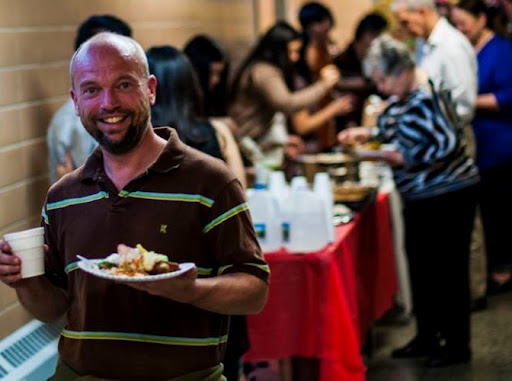
A Feast
Meals are an important symbol in Scripture, from beginning to end. The story of creation includes God’s provision of an abundance of food for humans, but Adam and Eve broke the one rule and “feasted” from the tree that God had restricted. God’s response and plan throughout Scripture is to deal with sin, and to allow humans to enjoy His providence and His abundant feast at the end of time.
Jesus shows us what God is doing: He is the “Lamb of God, who takes away the sin of the world!” (John 1:29). His first recorded sign was turning water into wine, providing the guests of a wedding with a rich drink to enjoy (John 2:1-12). Jesus was able to take a humble meal of bread and fish and turn it into a feast for thousands of people (John 6:1-14).
And on the night before Jesus died, He shared a meal with His friends. In community with His followers, Jesus establishes bread as a symbol of His body, and wine as His blood (Luke 22:19-20). Food becomes a way to remember Christ’s death, as well as our redemption.
Isaiah reminds us that one day God will prepare a feast for peoples from every tribe and nation. The book of Revelation reminds us several times that people from every tribe and nation will be present at the wedding feast of the Lamb, which inaugurates God’s eternal kingdom. When this happens, the presence of evil will be completely gone; grace and shame will be no more; and death will be a thing of the past.
Nothing brings people together like food. The conversations that can happen over a simple meal can be profound and life-changing. This is especially true when believers meet with their neighbors, and the conversation turns to spiritual matters.
Week of October 7 through October 13
Something to think about this week: Reasons why, at times, Christians may feel far away from God.
DAILY BIBLE READINGS
Mon. – Luke 13:10-17 – Set Free from Bondage.
Tue. – Daniel 3:8-18 – Our God Is Able to Deliver.
Wed. – Daniel 3:19-27 – Our God Is Unstoppable.
Thu. – Matthew 8:5-17 – A Cry for Help in Distress.
Fri. – Mark 10:46-52 – Have Mercy on Me!
Sat. – Psalm 107:23-32 – God Delivers Us from Our Distress.
Sun. – Psalm 22:1-11, 19 – 22 – Deliver My Soul, O God.

“Well I was hitting pretty well, but my eyesight’s gotten so bad I couldn’t see where the ball went.”
“Well you’re 75 years old now, Jack, why don’t you take my brother Scott along?” suggested his wife.
“But he’s 85 and doesn’t even play golf anymore,” protested Jack.
“But he’s got perfect eyesight. He could watch your ball.” his wife pointed out.
The next day Jack teed off with Scott looking on. Jack swung, and the ball disappeared down the middle of the fairway.
“Did you see it?” asked Jack.
“Yup,” Scott answered.
“Well, where is it?” yelled Jack, peering off into the distance.
“I forgot.”
Lesson 07 – October 13 – A Plea for Deliverance
Sometimes there are no answers to hard questions on this side of heaven. In today’s lesson, we look at the Davidic Psalm 22, where David asks God why He had forsaken him. Many of our friend’s loved ones may be asking that same question.
In the end, David trusts God, reminding himself that God had been his God since birth. God remained faithful, even when situations were dire. David’s trust remained in that God, who had loved him all his life.
If people you know are going through difficult journeys, stand by them, encourage them, listen if they want to talk. And if they are ready to hear it, point them to the one who will hold them, covering them with His mighty wings. Remind them to hold on to their faith, even in the darkest days: “Though the fig tree does not bud and there are no grapes on the vines, though the olive crop fails and the fields produce no food, though there are no sheep in the pen and no cattle in the stalls, yet I will rejoice in the LORD, I will be joyful in God my Savior. The Sovereign LORD is my strength; he makes my feet like the feet of a deer, he enables me to tread on the heights” (Hab. 3:17-19).
Psalm 22 may describe David’s feelings during his flight from King Saul (1 Sam. 20-26). After four years of running from Saul, David felt isolated, desperate, persecuted, and hopeless. Yet, David had enough hope to remain faithful. He strived to trust God in the midst of trouble.
Despite these circumstances, themes of deliverance and salvation could also be found within Psalm 22—both for David at the time he wrote it and for those of us reading it today. David’s descendant, Jesus, would repeat David’s opening words to this psalm—and live out several more verses—more than a thousand years later, as He died for us on the cross.
Even though we might feel alone in our affliction, we really aren’t alone. Although we don’t see Him or might think He’s not listening to our prayers, He really is with us and will respond to our pleas.
Week of September 30 through October 6
Something to think about this week: What kind of cleaning supplies do you have around the house and when do you use them?
DAILY BIBLE READINGS
Mon. – Hebrews 10:26-35 – Do Not Persist in Sin.
Tues. – 2 Corinthians 7:5-11 – Godly Grief Leads to Repentance.
Wed. – Proverbs 28:4-18 – The Righteous and the Wicked.
Thu. – 2 Samuel 11:1-5, 14-24 – Sin’s Deadly Spiral.
Fri. – Lamentations 5:1-3, 15-22 – God, Restore Us.
Sat. – John 21:15-19 – Follow Christ.
Sun. – Psalm 51:1-13, 16-17 – Create in Me a Clean Heart.

This is what God wants from us: a broken and contrite heart. He wants us to admit our sins; ask for mercy; and gratefully accept the forgiveness that He graciously offers, then resolve to obey while asking God for help. 2 Chronicles 7:14 tells us, “If my people, who are called by my name, will humble themselves and pray and seek my face and turn from their wicked ways, then I will hear from heaven, and I will forgive their sin and will heal their land.”
Prayers of Repentance and Confession
Repentance and God’s grace and mercy go hand in hand. We cannot have one without the other. All God’s good and loving purposes in sending Jesus Christ to earth do us no good unless we repent.
We may feel guilty and not repent. True repentance springs out of deep sorrow and regret for wrongdoing, or sins against God and His holiness, as David expressed in Psalm 51. We may describe that place as hitting bottom with nowhere left to turn but to look up to God. As David said, there is nothing we can do but fall at God’s feet, completely dependent on His mercy. There, we desperately seek a way out of the mess, the muck and mire of our life. We acknowledge we need the cleansing that comes only when we repent, turn away from ourselves, and turn wholly toward God. “[God] saved us, not because of righteous things we had done, but because of his mercy. He saved us through the washing of rebirth and renewal by the Holy Spirit” (Titus 3:5). A sincere, open, and repentant heart that truly believes then receives all the benefits of Christ’s sacrifice on the cross.
As God’s people, we sing songs of prayer as well as of worship. This week we studied David’s prayer of confession and repentance. David was a man after God’s own heart, but that did not prevent him from sinning in a big way. We may not do what David did, but we can certainly be tempted to satisfy our needs and desires that are not God-honoring.
Ask God for a Clean Heart
David’s powerful prayer of confession and repentance in Psalm 51 guides us through acknowledging and facing our sin and need for God’s mercy and forgiveness. David’s words help us assume a posture of dependence, hope, and praise for God’s faithfulness and lovingkindness as we bring our own sacrifice of a broken spirit and contrite heart.
Week of September 23 through September 29
Something to think about this week: The last celebration you attended (a birthday, a graduation, an open house, etc.).
DAILY BIBLE READINGS
Mon. – Isaiah 42:13-17 – God Goes Forth like a Warrior.
Tues. – James 5:7-11 – Be Patient, the Lord Is Coming.
Wed. – 1 Peter 3:18-22 – Saved through Water.
Thu. – Exodus 14:21-31 – Victory at the Sea.
Fri. – Psalm 104:1-9 – God Protects Creation.
Sat. – Psalm 147:1-12 – Our Worship Gives God Joy.
Sun. – Exodus 15:1-13, 20-21 – Sing of God’s Glorious Triumph.

Lesson 05 – September 29 – Moses and Miriam Lead the People in Praise
A Life of Celebration
We often gather to celebrate God. Moses led the people in praise, and they worshiped God together. By definition, celebration implies community. It’s hard to celebrate by ourselves. An important part of our worship is exalting God and His character. The Israelites celebrated God by singing about His characteristics. Our God is majestic, is holy, and works wonders. A “wonder” is something beautiful or unexpected—perhaps unexpectedly beautiful. It’s so amazing it takes us by surprise and may inspire awe and admiration. This is our response to God’s glorious works. Any aspect of creation, any gift we acknowledge from His hand, any miracle recorded in Scripture leads us to acknowledge almighty God in worship.
The Israelites’ song mentioned general and specific wonders. When God stretches His hand over creation, it obeys His command. God rescued Israel from slavery. How much more has He rescued us when we accept Him as Lord and Savior and redeemed us from slavery to sin! (see Rom. 6:22)
Israel responded to God’s lovingkindness with praise and worship, and we are encouraged to do the same. As long as God reigns, He will establish His people and keep His promises of inheritance. And God will reign forever.
Moses’ sister, Miriam, encouraged the women to follow her in celebration with music and dance. We worship Him in grateful response to the covenant relationship He has initiated with us, and we praise Him for His goodness and mercy in offering us eternal redemption.
It’s Time to Celebrate!
Moses and Miriam’s songs of praise to the Lord provide examples of how to celebrate God. We celebrate God by giving Him honor, praise, and worship.
Week of September 16 through September 22
Something to think about this week: Why do you worship God?
DAILY BIBLE READINGS
Mon. – 1 Corinthians 5 – Abstain from Immorality.
Tue. – Revelation 5:6-14 – Worthy Is the Lamb!
Wed. – 2 Chronicles 34:8,14-27 – God Forgives Those Who Repent.
Thu. – Psalm 85 – Restore Us Again, 0 God.
Fri. – Ephesians 5:3-14 – Living in the Light of Christ.
Sat. – Exodus 12:3-17 – A Day of Celebration.
Sun. – 2 Chronicles 35:1-6, 16-19 – Sanctify Yourselves.
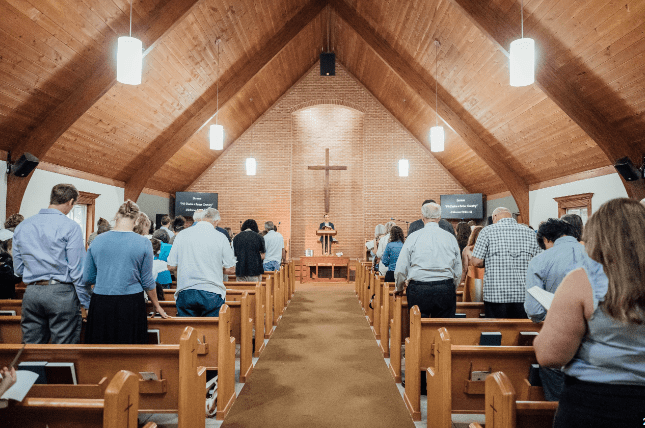
Why do I worship God? I have many reasons, but these verses get to the heart of it: “Because of the LORD’S great love we are not consumed, for his compassions never fail. They are new every morning; great is your faithfulness” (Lam. 3:22-23).
Lesson 04 – September 22 – Josiah Celebrates Passover
There’s an old Scottish proverb that remains a relevant warning for the way we live today: “Danger past, God forgotten.” The point of the proverb is that we tend to pray for God’s help most fervently and diligently when we’re going through some kind of trouble especially the kind in which we see no way out. In time, the help usually does come in some form or another; then over time we ease back into our daily routine. While returning to the safety of our customary lifestyle, we begin to forget the distress that we had been in. Subsequently, we forget the way God rescued us.
Decades ago, part of my journalistic training involved learning the right questions. In each newspaper article I wrote afterward, I made sure to answer six questions: “Who, what, when, where, why, and how?” If any of those went unanswered, my editors wanted a clear explanation.
In my Bible study, I ask the same six questions regarding the text. And those questions have extended to the practice of my faith as well. But though all six are important, one question has risen to be more vital to me than the others: Why?
Remembering why I worship God may involve celebrating a holy day or festival. Or it may involve singing a particular song of praise. But in the end, remembering why always involves the prompting of God’s love for me through His Son, Jesus Christ. “We love because he first loved us” (1 John 4:19).
Giving Thanks
Routines can become robotic. We might go to church and sing the same hymns every Sunday and never stop to think what the words mean or apply them to our lives. We are admonished in God’s Word that whatever we do in worshiping, we should honor Jesus and as a form of giving thanks. “And whatever you do, whether in word or deed, do it all in the name of the Lord Jesus, giving thanks to God the Father through him” (Go!. 3:17).
We all worship God in a particular way. This week, ask yourself the question “Why?” every time you worship God in your personal time, at church, or even at work.
Week of September 9 through September 15
Something to think about this week: How and when you pray.
DAILY BIBLE READINGS
Mon. – Romans 8:29-39 – We Are More than Conquerors through Christ.
Tue. – 2 Corinthians 4:8-18 – Do Not Lose Heart.
Wed. – Psalm 69:1-15-God Protects Me.
Thu. – Psalm 69:16-21, 29-36 – The Lord Hears the Needy.
Fri. – 2 Thessalonians 3:1-5 – God Will Strengthen and Guard You.
Sat. – 2 Kings 19:14-19 – A Humble Prayer for Help.
Sun. – 2 Kings 19:20-31 – God Is a Powerful Defender.
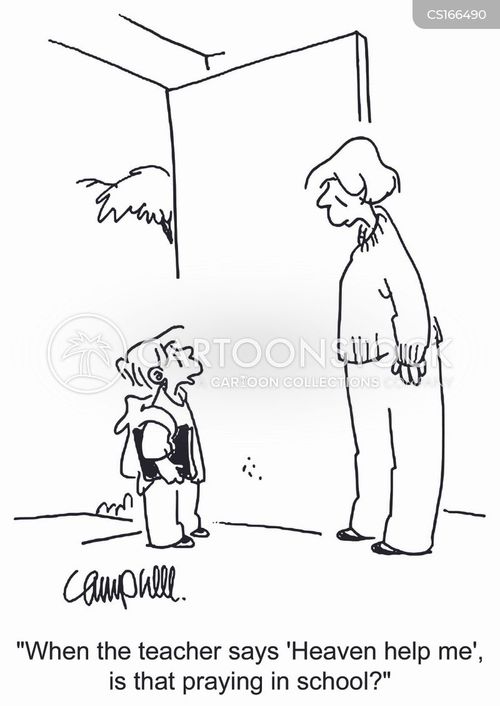
5 “And when you pray, do not be like the hypocrites, for they love to pray standing in the synagogues and on the street corners to be seen by others. Truly I tell you, they have received their reward in full. 6 But when you pray, go into your room, close the door and pray to your Father, who is unseen. Then your Father, who sees what is done in secret, will reward you. 7 And when you pray, do not keep on babbling like pagans, for they think they will be heard because of their many words. 8 Do not be like them, for your Father knows what you need before you ask him.
9 “This, then, is how you should pray:
“‘Our Father in heaven,
hallowed be your name,
10 your kingdom come,
your will be done,
on earth as it is in heaven.
11 Give us today our daily bread.
12 And forgive us our debts,
as we also have forgiven our debtors.
13 And lead us not into temptation,
but deliver us from the evil one.’
14 For if you forgive other people when they sin against you, your heavenly Father will also forgive you. 15 But if you do not forgive others their sins, your Father will not forgive your sins.
Lesson 03 – September 15 – Hezekiah’s Prayer
Being Persistent in Prayer
Every believer knows that prayer is a vital part of the Christian walk. It is how we commune with God our Father, and what relationship can grow without communication? Back in the Old Testament, when the Israelites wanted to pray, they relied on priests to pray on their behalf and to enter the presence of God; the most Holy Place was full of God’s presence. But since Jesus came and died for our sins, He tore the curtain that was dividing us from God and made the Father accessible to all of us, every moment of the day (Mark 15:38). There is no longer a need for a high priest or an animal sacrifice, for Jesus is our High Priest and the Lamb of God (John 1:29). Those roles have been fulfilled for perpetuity. We have full and open access to God.
In our “I-need-it-now” world, we expect God to answer our prayers immediately, like a genie in a bottle. We liken praying to ordering something online and waiting for it to arrive at our door. That’s not how God works. Sure, there are instances of immediate healing and miracles that happen before our eyes. But most of the time, prayer involves waiting. Waiting for the right timing, for the right next opportunity, for the next door to open. And sometimes we think that God didn’t hear us, or God says no. If it seems like the answer isn’t coming or perhaps not the answer we expected we need to trust that God sees variables that we do not.
God’s timing is always perfect. If we pray for His will to be accomplished in all circumstances, we know it will be when the time is right. In the meantime, we keep praying and encouraging one another in the faith.
Week of September 2 through September 8
Something to think about this week: Ponder a time someone forgave you for something, especially if it was something that seemed unforgiveable.
DAILY BIBLE READINGS
Mon. – Romans 8:18-28 – Sighs Too Deep for Words.
Tue. – Psalm 34:11-22 – God Hears Our Cry for Help.
Wed. – Nehemiah 12:27-30, 44-47 – Celebrate with Rejoicing, Thanksgiving, and Singing.
Thu. – 2 Chronicles 7:12-22 – Bring Your Requests Before God.
Fri. – Luke 11:1-13 – Lord, Teach Us to Pray.
Sat. – 1 Kings 8:22-24, 27-30, 37-43 – God the Promise Keeper.
Sun. – 1 Kings 8:44-53 – Hear Our Plea and Grant Compassion.

Lesson 02 – September 8 – Solomon Dedicates the Temple
Will You Forgive Me?
It is the people who are closest to us—siblings, best friends, spouses—who can hurt us deeply. With conflict in the air, it can be hard to know what to say. Even if we decide to put a hurt behind us, to move on, it’s really not over until someone reaches out to clear the air and request forgiveness. And then, there is a real possibility for change.
Maybe it’s that way with God too. Every one of us is prone to wander away from God and pretend as if we’re calling the shots. How often do we confess these selfish motives and ask our heavenly Father’s forgiveness? Time and again I find myself trying to bury the past, to avoid thinking about the ways I have wandered from God. I know that Jesus paid for all my sin—past, present, and future—but still Scripture teaches us to confess our sins. What a gift that we can predict a favorable response from God! Scripture says, “If we confess our sins, he is faithful and just and will forgive us our sins and purify us from all unrighteousness” (1 John 1:9).
Today we read King Solomon’s dedication in 1 Kings 8, where He leads Israel in worship of God. He also asks God to hear the prayers of a repentant people, to forgive and restore them after sin has clouded their hearts.
God is pleased when we worship with our whole hearts. He desires our repentance and a restoration to our close relationship. The psalmist rejoices because he can say, “I acknowledged my sin to you and did not cover up my iniquity. . . . And you forgave the guilt of my sin” (Ps. 32:5).
Forgiveness Over Justice
Forgiveness is hard. You may be thinking, You don’t know what so-and-so did to me; that person does not deserve forgiveness! True, but you don’t deserve forgiveness either. None of us do. That’s the whole point of grace—getting the opposite of what we deserve. We receive a blessing when we deserve a curse, abundant life instead of death.
How have you experienced great forgiveness in your life—whether by God or someone you know? Who is someone to whom you need to extend forgiveness?
Week of August 26 through September 1
Something to think about this week: Is worship a duty or a privilege?
DAILY BIBLE READINGS
Mon. – 2 Corinthians 1:16-24 – God’s Promises Are Always “Yes.”
Tues. – Genesis 12:1-9 – A New Life of Obedience.
Wed. – Genesis 12:10-20 – Fear Not Faith.
Thurs. – Philippians 4:10-19 – God Will Fully Satisfy Your Needs.
Fri. – Colossians 2:6-12 – Walk in Christ with Thanksgiving.
Sat. – Psalm 16 – God Gives a Godly Heritage.
Sun. – Genesis 13:8-18 – Gratefulness for God’s Promises.

John F. Kennedy, Michael Jordan, Billy Graham
Why do we honor each of these people?
This lesson encourages us to honor God wherever we go.
Lesson 01 – September 1 – Abram Builds an Altar at Mamre
Have you ever made a decision that you somehow knew was a bad choice? Maybe as soon as you made the decision it called to mind the phrase from Star Wars, “I have a bad feeling about this.” There are times when we know we’re making a mistake, and we proceed ahead. There are also times when we make a decision and suspect that everything is going to turn out fine. Every decision carries consequences—perhaps none more than choosing where to live.
I’ve had the privilege to live in many places around the United States. When I lived outside of Chicago, I was in a densely-populated suburb full of people and life. When I lived on the outskirts of Bumpus Mills, Tennessee, I was in the middle of fields and forests—the countryside. I lived near the Great Smoky Mountains, which were lush and so different from the craggy edges of the Rocky Mountains. Every place is different, but place didn’t stand out as much as people. Wherever I lived, I managed to find people who were honoring God.
When facing conflict with his nephew, Abram took the initiative to settle a dispute. As the senior member of the family and the one called by Yahweh, Abram could have demanded a primacy of place. Instead, he allowed Lot to decide where to live. He risked being cheated! But in the end, Abram found favor with God for his decision, and the Lord gave him a worthy home.
It can be difficult to honor God in situations where others are not doing so. We can honor Him with our actions in church; but in the rest of our lives, we have the push and pull between honoring Him and not standing out from what friends may be doing or saying. The world is always watching and looking for consistency in our lives: Are we pointing others to God, or are we making ourselves the center?
Is It a Lifestyle?
Do you compartmentalize your life? Do you act one way at church, but you let another side of yourself show to the people at work? Are there occasions when you use coarse language to run others down? Do you forget to be gracious? Jesus died for our sins that we might be transformed and live a life that honors Him, wherever and whenever. God doesn’t want us to compartmentalize our lives but to intentionally honor Him by how we live each day.
 Bethel Cumberland Presbyterian Church