Week of August 25 through August 31
Something to think about this week: Evidence that the light of God is overcoming the darkness.
DAILY BIBLE READINGS
Mon. – Isaiah 28:14-22 – A Sure Foundation.
Tues. – Psalm 122 – Let Us Enter the Lord’s House.
Wed. – Psalm 50:1-15 – Offer a Sacrifice of Thanksgiving.
Thurs. – Galatians 3:23-29 – One in Christ Jesus.
Fri. – Ephesians 4:4-16 – One Lord, One Faith, One Baptism.
Sat. – Isaiah 51:9-16 – Everlasting Joy of the Ransomed.
Sun. – 1 Peter 2:1-12 – Rejected by Mortals, Chosen by God.
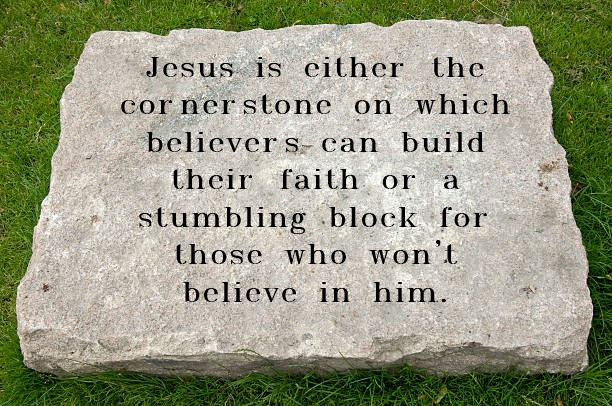
Lesson 14 – August 31 – Living Stones in a Spiritual Temple
Living Stones in a Spiritual Temple
Some say that our virtual identities have become as important as, if not more important, than who we are in real life. With social media at our fingertips, it is possible for us to build online identities and friendships that differ wildly from who we are in real life. We can curate a personality that seems to have everything together. Our online identities might be successful, funny, have opinions, and large followings. We can be exactly who we want to be and control how we are seen by others with a few clicks of a button. American psychologist Professor Jonathan Haidt has devoted his career to researching the impact of social media, particularly on the development of young people between the ages of eight and fifteen. He has examined the harmful effects and pressure that cultivating an online identity puts on young people.
But identity is not given to us by the online world, or even the cultures around us. Scripture calls the people of God “a royal priesthood, a chosen nation.” We don’t have to be defined by our glamorous pictures or respectable careers. There is a far richer and more fulfilling identity, one defined by our maker. Every believer has unique importance, potential, and purpose as a “living stone” for the building of God’s house. These living stones exist in fellowship with one another, in light of this glorious new identity and purpose.

Father, Son, and Holy Spirit, we don’t know what to make of the fact that You call us the light of the world. Perhaps we enjoy that status too much and make ourselves the message. Or perhaps we struggle to accept that role, since we do not like the responsibility. But give us strength to resist the powers of darkness—together—and to be a beacon of light. Grant us joy in the work of sharing the message of Your kingdom. We pray in Christ’s name. Amen.
Week of August 18 through August 24
Something to think about this week: What inspires you to endure and to keep sharing the good news of Jesus?
DAILY BIBLE READINGS
Mon. – Joel 2:12-17 – Return to the Lord.
Tues. – James 2:14-26 – Faith without Works Is Dead.
Wed. – Psalm 146 – Everlasting Reign.
Thurs. – Psalms 149-150 – A New Song
Fri. – Luke 11:1-13 – Teach Us to Pray.
Sat. – Hebrews 13:1-8 – Practice Deeds of Mutual Love.
Sun. – Hebrews 13:9-21 – Offer Sacrifices of Praise.

A woman was nervously waiting at the airport for her husband to return from his skydiving lesson. The pilot approached her: “I’m sorry, but there’s been an accident. I have some bad news, some good news, some more bad news, and some more good news.
The bad news is your husband fell out of the plane. The good news is he had his parachute on. The bad news is he hit the ground before his chute could open. The good news is we hadn’t taken off yet.”

In Hebrews 13, the author gives the believers specific instructions for living the Christian life: love each other, show strangers hospitality, remember those in prison, keep marriages pure, and avoid the love of money (vv. 1-5). They could “imitate” the lives of the “leaders” (v. 7) who had brought them into the faith, but the ultimate model and leader is God Himself. He will never leave us (v. 5), He is our “helper” (v. 6), and He is “the same yesterday and today and forever” (v. 8).
Lesson 13 – August 24 – Sacrifices of Praise
Christ’s public ministry and his sacrificial death were for us. There were many other things that Jesus could have done with His time, but He willingly devoted it to protect us, as a shepherd. That kind of protection, nurture, and love from Jesus can be emulated by His followers—if they are willing to look to His example of hospitality: sharing hope, loving each other, remembering those in prison, and other endeavors that could emulate the selfless sacrifice of Christ.
Any sacrifice that we offer back to God is going to pale in comparison to what Jesus did for us. But that shouldn’t let us off the hook or cause us to give anything short of our best to God! As in other texts, we learned in this lesson from Hebrews that doing good and sharing with others is required (especially among the family of faith). You may know of examples of people who have devoted their lives to ministry or evangelism or who have put their own desires second to the needs of others.
Jesus, we are humbled by the dishonor and shame that You were willing to experience on our account. We want to be Your friends and followers, even if that means enduring trials ourselves. Please remind us of Your sacrifice, even in the ordinary moments of our lives.
We pray in Your name. Amen.
Week of August 11 through August 17
Something to think about this week: What kinds of barriers keep Christians from acting like the unified people of God?
DAILY BIBLE READINGS
Mon. – Isaiah 49:1-6 – A Light to the Nations.
Tues. – Romans 9:14-24 – God’s Mercy Reaches All.
Wed. – Romans 10:1-15 – Salvation Is for All.
Thurs. – Romans 11:16-29 – Grafted Branches.
Fri. – Zechariah 8:1-12 – God Will Dwell in Our Midst.
Sat. – Zechariah 8:13-23 – Seek God Together.
Sun. – Ephesians 2:11-22 – Built into a Holy Temple.

Lesson 12 – August 17 – The Two Made One
In Paul’s time the Jews and the Gentiles were learning to come together to live as a family. They had a lot they could fight about. Coming from very different backgrounds, each had a different understanding of what it meant to be faithful. Jews struggled to embrace Gentiles who didn’t follow the Jewish laws and practices. Gentiles were entering a new way of life, without the shared memory of living as God’s people. Paul says, put aside what you thought you knew; you are all family now! He shifts their focus from what divides to what they could welcome in one another.
When we work alongside those who are different from us, we may feel challenged by our differences. But if God was able to overcome the boundary between Jews and Gentiles, we can overcome any lesser boundaries that we have created ourselves. We might fear losing what makes us unique, but Paul never says that Jews stop being Jews or that Gentiles stop being Gentiles. The peace that God brings is able to include our differences and make them fit together in a greater whole. The peace that God gives us makes us courageous enough to bridge the divide and to take a risk, knowing that God has already made us part of one collective family as Christian believers.
Father, help us to see that You have brought peace through Your Son. Help us to see where we can extend peace and welcome to our Christian brothers and sisters. Please provide us fresh opportunities to find unity in our community and in our relationships with one another. We pray in Jesus’ name. Amen.
Week of August 4 through August 10
Something to think about this week: Evidence of any conflicting messages that our culture sends about the significance of our bodies.
DAILY BIBLE READINGS
Mon. – Genesis 2:4-7, 18-25 – God Creates Man and Woman.
Tues. – Psalm 90:1-12 – Life Is Short; Live Wisely.
Wed. – 1 Corinthians 10:23-33 – Live Gloriously.
Thurs. – 1 Timothy 4:1-5 – Receive God’s Gifts with Thanksgiving.
Fri. – Psalm 139:1-12 – No Hiding Place from God.
Sat. – Psalm 139:13-24 – Fearfully and Wonderfully Made.
Sun. – 1 Corinthians 6:12-20 – A Temple of the Holy Spirit
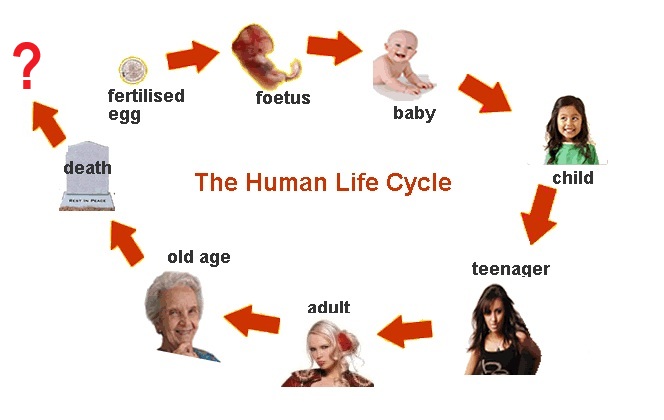
There were many competing views about the fate of the dead in the first century. Some, like the Epicurean philosophers and the Jewish Sadducee sect, believed that death extinguished conscious life. A more popular view among the Greeks was that the soul lived on after death and either ascended to higher planes of existence—as semi-divine being—or was ensnared again in the physical realm and reincarnated. In this view, bodily existence was an inferior state.
In contrast, Jesus and His disciples had a positive view of bodily life. In common with the Pharisees, they taught that God would one day resurrect the dead, perfecting their material bodies and all creation with them. The church of Corinth, the capital of the Roman province of Greece, had trouble Accepting Paul’s teaching about the bodily resurrection. It was foreign to their negative views of the body (see 1 Cor. 15).
Lesson 11 – August 10 – Our Bodies Belong to God
A New, True You
Looking back over my adolescence and young adulthood as a more mature Christian, I can see why, back then, I felt the need at times to stifle my Christianity or loyalty to God, for the sake of “going along to get along.” I had this fear of seeming like a “holy roller” or someone who would not be any fun to be around or who would bring down the mood by talking about “what Jesus would do.” In a sense, I guess I did not feel free to be my Christian self.
I can also remember that, had I leaned more into my faith and meditated more on God’s Word, I would not have let my bodily desires put me in situations that left me feeling like a failure in God’s eyes. I know that there is no need to dwell on prior mistakes, and it is best to learn from the past; but it is human nature to wonder what could have been, had I stayed the course of my Christian faith.
What more seasoned Christians know is that using our whole beings—the body included—for the glory of God far outweighs any satisfaction we get from using our bodies to honor and please ourselves. God understands our earthly desire to “go along to get along,” which is an age-old story that has gotten many people into trouble.
But I also want to help others see that shame does nothing but drive us deeper into the wrong patterns. Thank goodness that I can be transformed in my renewed faith. God is not keeping count of my past mistakes. The love of God invites all believers to find the meaning of real freedom—freedom from being slaves to sin, slaves to our desires, or captive to what the world expects. I belong to God!
The topic of this lesson is important, but it can be a sensitive topic. Paul did not write these words to put shame upon the Corinthians. Many of them had checkered histories and unhelpful patterns of behavior. But Paul challenged them to look with new eyes at the reality that was accomplished when they received Christ and became a new creation. God wants us to be honest with Him about any unhelpful desires and attitudes, and holding those up in prayer is a worthy way to be prepared to flee when temptation is before us.

Father, we desire to become the people You have chosen us to be. We desire to be temples of Your Holy Spirit. Help us to see that this is already true, that You are always inviting us to come to You and to surrender our whole selves. We acknowledge that we are Yours, and that because of Jesus we are not slaves to our desires. We pray in His name. Amen.
Week of July 28 through August 3
Something to think about this week: What it means to be truly wise.
DAILY BIBLE READINGS
Mon. – Ezekiel 47 – The River of Life.
Tues. – 2 Corinthians 6:1-18 – A Holy Temple.
Wed. – Matthew 16:13-20 – Christ Will Build His Church.
Thurs. – Psalm 24 – Seeking God’s Face.
Fri. – Psalm 63 – Behold God’s Glory in the Sanctuary.
Sat. – 1 Corinthians 3:1-9 – God Grows Us.
Sun. – 1 Corinthians 3:10-23 – Building on a Sure Foundation.

Lesson 10 – August 3 – Christians as God’s Temple
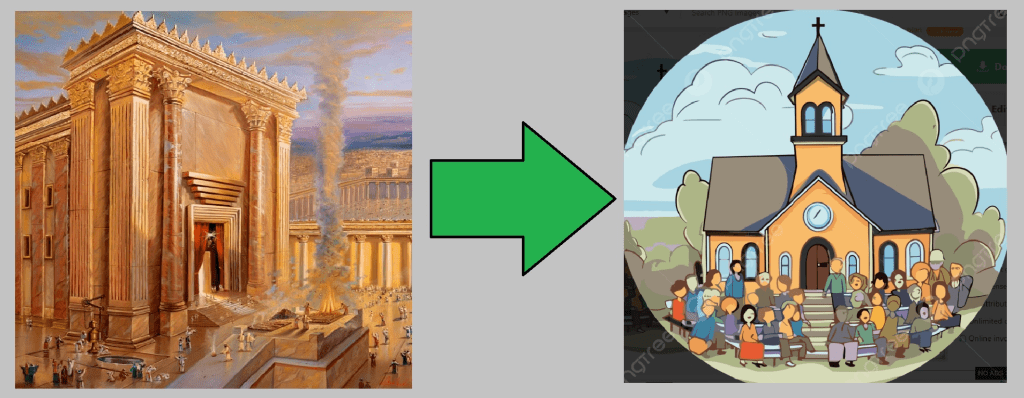
For centuries, the Israelites connected God’s “home” to the temple. The walls of the temple, the materials that fashioned it, the symbolism etched into every object—all of these helped form their ideas of what it means to be at home with God. But now, God was on the move! Imagine what a transition that would have meant for them. Paul wants readers to understand that God is bigger than the walls of the temple. His Spirit is not the building; it is the life inside. And now, that Spirit is moving beyond the walls of the temple and into every follower of Jesus.
If God’s Spirit is not bound to a building, then the universal church isn’t, either. It is the life lived among believers that constitutes God’s true home, When we come together, God’s presence can be shared among us. That is why Paul says, “you together” are the temple. It’s why unity is so important. This is not something we can do by ourselves.
Again and again in today’s text, Paul calls attention to the unique call for leaders of God’s people. Because God’s people are a temple, together, those charged with building this community will be held to a high standard.
On the one hand, the message from today’s text has a lot of guidance for the leaders of a church. But on the other hand, we can all devote ourselves to God, whether we are in the ministry field or working a different job to pay the bills (see Col. 3:23). Paul did that too. But we also have a special responsibility to support and pray for our community leaders.
Spirit of God, we welcome You to make Your home with us. Show us what it means to be a people who carry Your presence, and make our leadership wise in what matters to You, which might not be the same as what matters to the world. Give us the insight to see the difference. We ask this in Christ’s name. Amen.
Week of July 21 through July 27
Something to think about this week: The last time you received difficult news.
DAILY BIBLE READINGS
Mon. – Revelation 11:1-13 – God Preserves.
Tues. – Revelation 12:1-11 – Victory through the Lamb’s Blood.
Wed. – 2 Kings 25:1-7 – David’s Lineage Is Cut Down.
Thurs. – 2 Kings 25:8-21 – The Temple Is Destroyed.
Fri. – Daniel 11:21-35 – A King’s Treachery.
Sat. – Matthew 23:1-12, 37-39 – Lament for the Wicked City.
Sun. – Matthew 24:1-8 – Don’t Be Led Astray.

Sure enough, it wasn’t long before our small boat was confronted by the mounting waves. You can probably imagine the chaos on that small boat, while braving the unforgiving swells of the South Atlantic Ocean.
Following Jesus can also set us up for rough seas. Beginning with great joy and excitement for the destination ahead, the journey requires that we weather storms in-between. How reassuring it is to trust a captain who has read the weather report and knows the way! Jesus warns His disciples of the changing world, predicting the destruction of the temple in Jerusalem and imminent wars, famines, earthquakes, persecution, and more (24:7-12). Some days I find myself with courage to weather the storm. On other days I simply “hold on to the rails.” You might ask yourself, “Which position do I find myself in today?” Whatever the headline or situation, I know that the words of our captain ring true: “The one who stands firm to the end will be saved” (Math 24:13).
Lesson 09 – July 27 – Jesus Predicts the Temple’s Destruction
Many of us struggle to see what faithfulness means in a world that does not honor Christ as king. But we do not have to look at every cultural change with fear. We don’t have to say, like the disciples, “What is the world coming to?” We know that the world is experiencing turbulence as we await a future when Jesus returns. Until then, when Christians find themselves at odds with their culture, they can welcome the opportunities for witnessing to friends and neighbors. We might even find that we grow and learn more about God as we invite Jesus to show us the way. Jesus’ followers will always stand out for their selflessness and humility. They lead best through quiet acts of devotion.
Jesus does not sugarcoat what His followers should expect. When the way of serving God no longer required a physical temple, His disciples couldn’t imagine what God would do instead. As they reasoned, big change must mean the end is near. But we don’t have the luxury of knowing when Jesus will return. We do know what He requires: faithfulness. Faithfulness was what God expected of His people in the past, and it is what God expects of us today.
Father, we need Your help to be faithful in a world that is pulling us in the opposite direction. Help us to spot the difference between the way of Jesus and the way of pretenders. And prompt us to find opportunities to show our quiet confidence that Jesus is coming. We pray in His name. Amen.
Week of July 14 through July 20
Something to think about this week: Read John 2:13-25.
Imagine the ideal space to worship a merciful God. What would entering that space feel like?
DAILY BIBLE READINGS
Mon. – Isaiah 56 – God Gathers Outcasts to the Temple.
Tues. – 1 Timothy 2:1-8 – Prayer and Holiness.
Wed. – Ecclesiastes 5:1-7 – Guard Your Steps in God’s House.
Thurs. – Acts 17:22-34 – God Doesn’t Live in Human Shrines.
Fri. – Jeremiah 7:1-15 – The False Security of Religious Posturing.
Sat. – Malachi 3:1-6 – The Messenger’s Arrival.
Sun. – John 2:13-25 – Zeal for God’s House.

Lesson 08 – July 20 – Cleansing the Temple

When Is Anger “Righteous”?
The world around us seems to be angry. We hear stories of road rage, when an angry exchange between drivers turns tragic. Protests when people peacefully march in support of human rights too often quickly diminish into angry name-calling, physical violence, and vandalism. Righteous indignation is rampant over what people do, say, and believe.
For Christians, is there a valid scenario when anger is righteous, or excusable? It’s easy to assume that, with Jesus as our example, imitating anything He does is acceptable. But this story is not an open invitation to start flipping tables whenever we feel offended. Jesus had a specific mission and a unique authority as the Son of God. His role was to follow the prompting of the Father, whether that meant healing the sick or turning over money tables in His Father’s house to expose rampant corruption.
Scripture more generally treats anger in a negative light. James 1:19-20 says, “My dear brothers and sisters, take note of this: Everyone should be quick to listen, slow to speak and slow to become angry, because human anger does not produce the righteousness that God desires.”
When faced with difficult situations, it’s easy to yield to emotions and act on them. However, wisdom usually dictates against an impulsive reaction. Jesus ultimately won over the masses through demonstrations of humility, kindness, graciousness, wisdom, and love. If you desire to be like Christ in your words and deeds, those positive qualities can set you on the right path.
Father, we know that You are devoted to our good. Rid us of impulsive anger, but fill us with Your desire to see everyone come to repentance. Make us more like Jesus, who communicated truth and mercy to those around Him. We pray in His name. Amen.
Week of July 7 through July 13
Something to think about this week: Do you have any weekly rhythms of rest and Sabbath?
DAILY BIBLE READINGS
Mon. – Deuteronomy 5:1-7, 12-15 – Honor the Sabbath Day.
Tues. – Hebrews 4:1-10 – Rest for the People of God.
Wed. – John 7:14-24 – Who Defines the Sabbath?
Thurs. – Psalm 92 – Hymn of Eternal Gratitude.
Fri. – Luke 13:10-17 – The Sabbath Healing.
Sat. – 1 Samuel 21:1-6 – Holy Bread for the Journey.
Sun. – Matthew 12:1-8 – Lord of the Sabbath.

Exodus 20:8 – You must remember to keep the Sabbath a special day.
Lesson 05 – July 13 – Lord of the Sabbath
The Purpose of Sabbath
The Sabbath was a gift God gave to His people, first after His provision of manna and quail to the Israelites in the desert, and then codified weeks later in the law of Moses (Ex. 16:1-30; 20:8-11). The people were to work six days and rest on the seventh, just as God had done when creating the world (Gen. 2:1-3). But in addition, the Sabbath gives recognition to God’s liberation of the people from Egypt, which was a place where they were never given rest (see Deut. 5:14-15).
In short, the Sabbath is a time for God’s people to remember and worship their Creator and provider, and it is also an expression of faith in His continued provision. As Jesus says in Mark, “The Sabbath was made for man, not man for the Sabbath” (Mark 2:27).
In the scripture for the lesson today, Pharisees criticize Jesus’ followers, but Jesus calls attention back to what is central in God’s eyes: whether or not we are showing a compassionate care and understanding for one another.
Father, we want to join You “on mission” as You carry the good news of Christ’s kingdom to the world. Reform our attitudes when we start to look more like Jesus’ critics than His friends. In all circumstances, prompt us to show mercy, as You have so obviously shown to us. We pray in the authoritative name of Jesus. Amen.
Church Service Canceled Today July 6, 2025
Week of June 30 through July 6
Something to think about this week: Times you’ve been surprised because of a child’s wisdom.
DAILY BIBLE READINGS
Mon. – Psalm 27 – Living in God’s Presence.
Tues. – 1 John 2:20-28 – Anointed by the Holy One.
Wed. – Deuteronomy 16:1-10 – Remember Israel’s Redemption.
Thurs. – Deuteronomy 16:11-17 – Rejoice before the Lord.
Fri. – Psalm 114 – Judah Has Become God’s Sanctuary.
Sat. – John 10:22-30, 34-38 – The Father and I Are One.
Sun. – Luke 2:41-52 – Jesus Learns in His Father’s House.

Lesson 06 – July 6 – The Boy Jesus in the Temple
Teaching in the Temple Courts 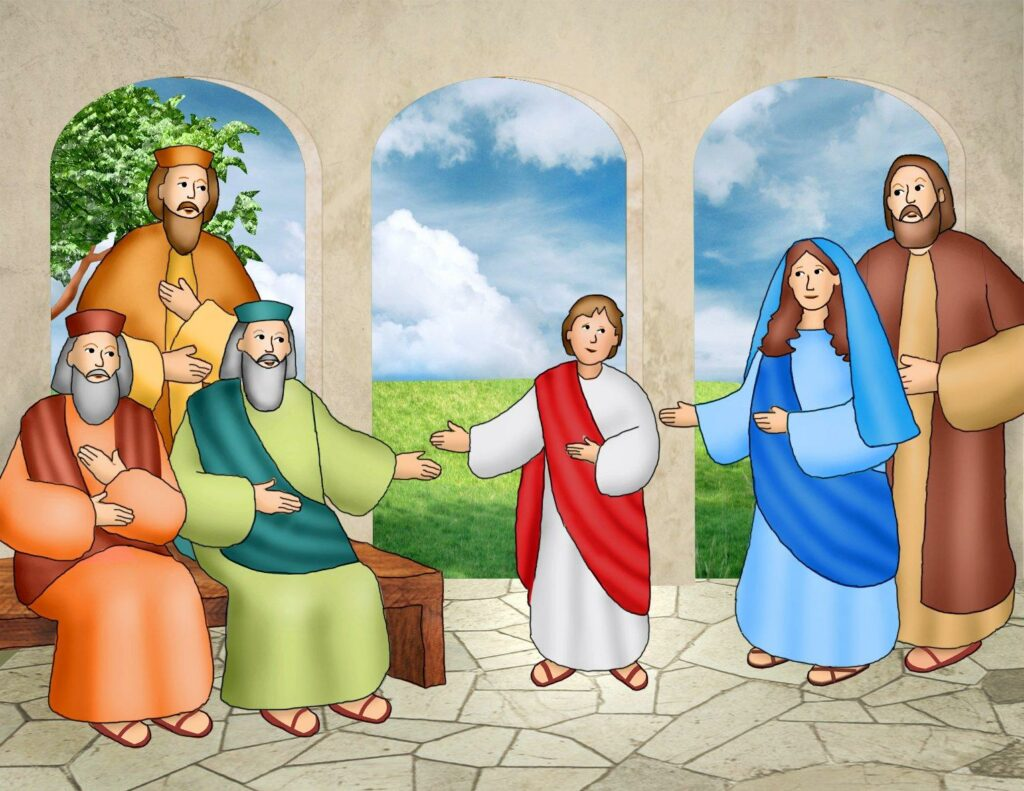
It was common practice in Jesus’ day for the teachers and members of the Sanhedrin (the court of Jewish law) to meet in public in temple courts in order to teach and discuss theological questions. They would gather especially during Sabbath and Jewish festivals. It is in this situation that we find the young Jesus. Certainly, among such an audience, any normal boy would have been awestruck and out of His depth. And yet, “Everyone who heard him was amazed at his understanding and his answers” (v. 47).
This situation is even more impressive when we consider Jesus’ possible dialogue partners. The famous Rabbi Hillel is thought to have been alive at this time and near a hundred years old. He might have been met by his well-known theological rival, Shammai. Hillel’s student and possible grandson, Gamaliel, might also have been sitting together with them. It was Gamaliel who would later teach the apostle Paul (Acts 22:3). We might imagine that the Rabbi Nicodemus could also be present, the same Nicodemus who would later visit Jesus in private some decades later (John 3:1-21).
There is no right or wrong way to respond to the surprises we receive from God. We might have stories of miraculous ways that God has “shown up” in our lives. God’s redemptive plans are often surprising, as they were for all of Jesus’ disciples and closest friends. No one expected the chosen Messiah of God to give His life in sacrifice for others. That was not the image of kingship that anyone was anticipating. Nor did they expect Jesus to be raised from the dead. God surprises us, in part, because the depths of His forgiveness and faithfulness go beyond our wildest expectations (see Isa. 55:8-9).
Sharing the Generosity of God
We serve a God who is faithful, sometimes in ways that we don’t anticipate. There’s no way to prepare to be surprised. But we can participate in God’s restorative plan by sharing God’s love and kindness. You are invited to surprise a friend, family member, or a stranger in the week ahead through an act of kindness.

Father, we often struggle to understand Your plans. We invite You to surprise us through Your mercy and faithfulness, beyond our expectations. Make us a people who enjoy good surprises and who desire to share the joy that You offer. We pray in Your Son’s name. Amen.
Week of June 23 through June 29
Something to think about this week: What sort of evidence tells us that God is with us?
DAILY BIBLE READINGS
Mon. – Genesis 35:1-7 – Jacob’s Return to Bethel.
Tues. – John 15:1-8 – Abide in Christ, the True Vine.
Wed. – Jeremiah 29:8-14 – Seek God with All Your Heart.
Thurs. – Matthew 18:15-20 – Christ Is among His Gathered People.
Fri. – Matthew 28:16-20 – Christ Is with Us Always.
Sat. – Psalm 16 – Fullness of Joy in God’s Presence.
Sun. – Genesis 28:10-22 – The Lord Is in This Place.

When my kids were young and before the availability of GPS, our family would take lots of road trips. A few weeks before we left, we would request a “TripTik” from the Automobile Association of America. This nifty little book full of maps took us from our home to our destination, page by page. We had a highlighted route that was easy to follow. We’d get excited when we could turn the page—we were one page closer to our vacation spot! As we traveled, we were glued to that little book. It gave us everything we needed, including points of interest, hotels, restaurants, and more.
Life can be like a trip, too. It can include road diversions, stop signs, and even accidents along the way. But instead of a TripTik, we have a spiritual guide—our heavenly Father—to show us the way and keep us on track. He knows what is ahead; He knows if we need to take an alternate route. He knows when we need to yield and when we need to keep our foot on the accelerator.
But He wants to be invited to join us on our journey. He is a gracious and patient God who won’t push His way into our lives where not invited. Invite Him: “Commit to the LORD whatever you do, and he will establish your plans” (Prov. 16:3).
Lesson 05 – June 29 – Jacob Sets Up a Sacred Pillar
Jacob stole his brother’s birthright (Gen. 25:31-34) and tricked his way into receiving the firstborn’s blessing from his father, Isaac (Gen. 27:19-29). After being found out, Jacob went on the run, fleeing from his angry and murderous brother, Esau (Gen. 27:41-43). Despite Jacob’s trickery, God still chose to use and to bless him, upholding the promise made to Abraham—that from him would come a great nation that would inhabit the promised land. In moments when Jacob appears alone and destitute, God’s promise remains as a whisper in Jacob’s ear. God had promised that the “older will serve the younger” (Gen. 25:23), proving that God’s hand was all over Jacob’s life.
When Jacob finds himself far from home, he discovers the profound truth that God is with him on his journey. His realization of God’s presence causes him to dedicate the rest of his life to serving and worshiping Yahweh, the one true God of Abraham and Isaac. Though Jacob is in a desolate place, God will keep His promise to bring him back into his father’s house and reunite him with his brother in the years to come.
It can be hard to remember God’s presence. Even in the most mundane parts of our lives, we can feel distant from God. But just as Jacob responds to God’s presence in worship and remembrance, we too can respond to God’s presence.

In the lesson today, Jacob set up a stone to help him remember that the unseen God was with him. It even made him afraid to think that God had been present all along, but he was unconscious of this reality.
What is an object that helps you to remember God’s presence with you? (It could be a stone, a cross, an image, or something else.)
Where do you need to be reminded of God’s presence most?
Consider placing your own “stone of memory” to remind you that God is unseen, but with you
God, we invite you to go with us through the upcoming week. We are not walking through life on our own understanding, but on Yours. Remind us of Your presence in our lives, and help us seek You as we walk through the routines of life. We thank You that You are always with us, even when we feel far away. We pray in Jesus’ name. Amen.
Week of June 16 through June 22
Something to think about this week: Verses that mention water in Scripture. What kinds of things does water represent?
DAILY BIBLE READINGS
Mon. – Leviticus 19:30-37 – Love the Foreigner as Yourself.
Tues. – Genesis 25:19-28 – The Birth of Twins.
Wed. – Genesis 26:1-11 – Stay in the Land.
Thurs. – Philippians 4:10-19 – God Will Supply Every Need.
Fri. – Genesis 26:12-23 – God Blesses and Provides.
Sat. – Romans 15:1-13 – Live in Harmony; Welcome One Another
Sun. – Genesis 26:24-33 – Making Peace with Others.

Lesson 04 – June 22 – Isaac Calls on the Name of the Lord
Everything feels tense during rush hour. If you want to learn about how quickly conflict can escalate, that is the time. The trains are packed, people shove their way through crowds, and commuters curse at the slightest delay. A sarcastic remark, a misplaced backpack—anything can trigger an eruption.
There are many people—myself included—who avoid conflict at all costs. That might work fine during rush hour, but avoiding all conflict in our personal lives can backfire and make conflicts harder to resolve later.
Why do we have a tendency to escalate conflict, when a calm resolution would serve everyone much better? Competition can be one factor. Sometimes conflict arises
from a perceived injustice, like someone cutting in line or not being let onto the last train. Conflict arises where there is serious wrongdoing or when someone has taken something that belongs to another person. Still, we often react on impulse and pass the blame, assuming the problem must be with someone else. This leads to miscommunication and misunderstanding, which only fuels the fire.
Followers of Christ are called to be peacemakers, just as Jesus mediated peace between humanity and God. With humility and patience, Jesus lays down His life, for the goal of reconciliation. His disciples are called to walk a similar path, even if it isn’t easy.
A Christmas Meal in a Time of War
It was Christmas Eve in 1944, and a German woman named Elisabeth Vinckens was preparing dinner with her twelve-year-old son, Fritz, in a remote cabin in Germany. Suddenly, with a knock on the door, three American soldiers were on their doorstep. One of them was wounded and bleeding in the snow. The German woman and her son took a risk by inviting the Americans to share a meal. It wasn’t long before another knock at the door brought four German soldiers. With quick thinking, Elisabeth insisted that all the soldiers disarm before entering her home, and she invited the two sides—men who had been at war only hours earlier—to a humble Christmas dinner of chicken soup. In the morning, all the soldiers returned to their posts for the final days of the war. But that memory of a peaceful Christmas dinner stayed with each of the men, until they met again in peace, several decades later.
God, help us surrender to You all of our dealings with others. We cast our worries on You and trust that You care for us. Please send Your perfect peace to guard our hearts and minds. We thank You for Your promise to give peace to those whose minds are set on You. We pray in Jesus’ name. Amen.
Week of June 9 through June 15
Something to think about this week: God’s mercy toward us
DAILY BIBLE READINGS
Mon. – Genesis 17:15-22 – God Promises a Son.
Tues. – Romans 4:1-15 – Abraham’s Righteous Faith.
Wed. – Romans 4:16-25 – Life Out of Death.
Thurs. – Genesis 12:1-7 – A Blessing to the Nations.
Fri. – Psalms 125-126 – Joy for Weeping.
Sat. – Hebrews 11:8-12 – Abraham’s Courageous Faith.
Sun. – Genesis 22:1-14 – God Will Provide a Lamb.

Lesson 03 – June 15 – Abraham Makes an Offering
Jeremy’s Sandwich Shop
Jeremy dreamt of owning his very own sandwich shop. He smiled as he turned the sign from Closed to Open on its first day. Soon customers began entering, and Jeremy got to do what he was good at: making the best hot sandwiches in town. Jeremy’s shop did well for many years after that opening day. His little shop didn’t make him rich, but neither did he struggle to pay the bills. He hired reliable workers and had many regular customers who grew to be his friends. His business made Jeremy feel like he had a place in the community.
Unfortunately, the economy took a downturn, and it wasn’t long before his business faltered. It felt like he was being asked to give up what he loved. He adored his shop, but most of all, he cared for the employees and knew they needed jobs.
The day came when he planned to lay off half the staff. As he invited the first person to his office to give the news, she knew immediately what was coming and broke down in tears. At that moment, Jeremy reversed course. He decided he would rather lose his home than his employees. He cashed in his retirement, sold the house, and put everything into reviving the shop. Though he didn’t know how he was going to make it, the economy turned a corner, and business picked up again. Somehow, Jeremy retained every employee. He was later honored by the local news for this dedication.
Just as Jeremy remained devoted to his employees, God wants us to be devoted to Him in times of uncertainty. We see this in Abraham’s story. He risked what he loved, since he believed that God provides. In that moment, Abraham found that his relationship with God meant more than anything.
Father, we wish we could know it all. We wish we never faced uncertainty. We even wish that following You would not require taking any risks. Please give us the necessary courage to withstand trials and uncertainty. In those moments, draw us closer to You. Remind us to walk in the footsteps of Jesus, who was willing to endure the cross for our sake. In His name we pray. Amen.
Week of June 2 through June 8
Something to think about this week: What changes after the flood?
DAILY BIBLE READINGS
Mon. – Genesis 6:11-22 – Obedience to God’s Command.
Tues. – John 6:15-20 – Jesus Joins Us in the Storm.
Wed. – John 14:18-27 – Peace through the Word.
Thurs. – Genesis 7:11-24 – God Protects.
Fri. – 2 Peter 2:1-9 – Divine Rescue.
Sat. – Psalm 77:1-2, 7-20 – A Cry for Deliverance.
Sun. – Genesis 8:13-22; 9:11-13 – A Covenant of Peace.

Lesson 02 – June 8 – Noah Builds an Altar
In the first book of the Bible, the story of Noah and the great flood stands as a testament to God’s desire to work through righteous individuals, despite the sinfulness of humanity. After enduring the destructive waters, Noah along with his family and the diverse array of animals emerge onto a land that has been washed clean, creation restarted. After the cataclysm, God gives hope in the form of a covenant agreement, which is symbolized by the rainbow. God promises never again to destroy the earth by flood.
This moment continues the story of Genesis 3-4, after Adam and Eve’s disobedience invites sin and disorder to the world, and their firstborn son commits murder. God’s words acknowledge that murder is going to continue (Gen. 9:4-6), but God will delay an “accounting” for wrongdoing. God shows compassion and mercy to Adam, Eve, and Cain (Gen. 3:21; 4:15); and God promises patience to all inhabitants of the earth.
God’s mercy can be shown through a variety of methods: sending friends and counselors to walk with us in difficulties, a church community that preaches the good news of Jesus, or perhaps even circumstances that work out to our benefit. All good gifts in this world are the result of God’s mercy and faithfulness. Because we live in a world where sin has been allowed to persist (temporarily), we might feel like God’s blessings arrive in unpredictable waves. But the gift of life is something that God gives to all—something that we should treasure and receive with gratitude.
This lesson has covered the aftermath of God’s first way of cleansing the earth from sin and evil. But what we learn from the covenant with Noah is that God didn’t hold any false impressions that sin had gone away, or that His own chosen people would be sinless. Quite the opposite! God graciously provides the opportunity for us to be restored to close relationship with Him. And God uses creation to remind us of Himself.

Take a moment with God to review your history of walking with Him. You might ask God to remind you of a time that mercy was available to you. Perhaps the moment that comes to mind was when you were walking closely with God. Or, perhaps God will remind you of a moment that He protected and restored you, even when nothing else was going well.
Week of May 26 through June 1
Something to think about this week: Times you have witnessed the destructive power of resentment, which can harm relationships.
DAILY BIBLE READINGS
Mon. – Proverbs 3:1-10 – Honor God with Your First Fruits.
Tues. – Hebrews 10:26-35 – Struggles of Faith.
Wed. – Hebrews 10:36-11:4 – The Righteous Will Live by Faith.
Thurs. – Acts 5:1-11 – Half-hearted Giving.
Fri. – Luke 20:45-21:4 – Give Your All.
Sat. – Revelation 6:9-17 – The Martyrs’ Cry for Justice.
Sun. – Genesis 4:1-15 – Acceptable and Unacceptable Worship.

others to listen to us, difficult relationships usually involve some degree of patience and persistence in prayer as we ask God to transform the hearts of others and to transform our own selfish motives. The most troubling aspect of the story of Cain and Abel is that we can all recognize ourselves in that story, and we know that anger can drive us to do terrible things.
Lesson 01 – June 1 – The Offerings of Cain and Abel
What Does the Lord Require of You?
Brie wanted to make a difference. To ensure a spot in her dream graduate school, she was desperate to complete her degree with honors. But she had so much going on—classes, work, church. Brie felt overwhelmed and convinced herself that it was okay to plagiarize papers. After all, she thought to herself, as a future counselor, I’ll be helping so many people. But her professor didn’t share the sentiment.
Brie’s final paper got flagged for plagiarism, and she was called before the student-conduct board. She failed her course and was dismissed from the university. She didn’t get to graduate with her class; while her friends celebrated and dreamed about their futures, Brie was left feeling the pain of her choices. She justified her actions “for the greater good,” rather than accepting responsibility and acknowledging the authority of her school administrators.
But eventually, Brie got back on track. She finished her degree the following year. She got into a graduate school—just not the one that would’ve fast-tracked her career. She took internships and worked multiple jobs for years until she finally reached her career goals. After many years, she would often think of her choice, which caused her a long delay on the journey.
Cain found himself faced with a choice too. He could have submitted to God and found the right way to honor the Creator. Instead, Cain seized the opportunity to make himself the authority. By ending his own brother’s life, Cain murdered a person whom God had created. When we fail to grant God the authority over our lives, we always put ourselves in charge. If we allow the enemy—sin—to be our guide, we might even have the impression that we did nothing wrong.
There is no shortage of circumstances that tempt us to take a shortcut, to make our own way, or to decide for ourselves what is acceptable. But God is with us in our struggles with sin and with other people, and He urges us to do what is right!
Father, we know we don’t always live up to the role that You planned for us. We find ourselves creating disorder and chaos when we place ourselves in charge and do not submit to Your authority. Make us a people who would give our lives for others, rather than taking a life. Help us to walk the path of Jesus. Amen.
 Bethel Cumberland Presbyterian Church