Summary lesson quotes from the David C Cook Adult Teacher’s Guide
Week of February 23 through February 28
Something to think about this week: Generosity to others.
Daily Bible Readings
Mon. – Neh. 4:15-23 – Work Together for the Common Good.
Tue. – Romans 15:1-17 – Welcome One Another in Christ.
Wed. – Proverbs 3:27-32 – Do Good whenever You Can.
Thu. – Ecclesiastes 5:4-8 – Fulfill Your Vows.
Fri. – Philemon 10-21 – Bear One Another’s Debts.
Sat. – James 2:14-26 – Provide for Others and Demonstrate Faith.
Next Week: Mark 12:28-34; James 2:14-17
Week of February 16 through February 21
Something to think about this week: Does God have a new door to open for you?
Daily Bible Readings
Mon. – Malachi 3:7-12 – Blessings to Those Who Give.
Tue. – Exodus 36:2-7 – Giving More than Enough.
Wed. – Psalm 67 – May God’s Ways Be Known.
Thu. – 2 Corinthians 9:1-6 – Ready with Voluntary Gift.
Fri. – 2 Corinthians 9:6-15 – Bountiful Sowing and Reaping.
Sat. – Matthew 28:16-20 – Go and Make Disciples.
Next Week: Acts 1:6-8; 2 Corinthians 8:3-9

Lesson 12 – February 22 – Stewardship and Mission
When I was young, my family would take summer trips to Chicago. We would go to museums, shows, shops, and tour all of the historical parts of the city. These trips were filled with fun and excitement for us as we got to see a city that had so much to offer. But we couldn’t help but notice, as we walked around the city, there were many people on the streets—people who looked desperate and seemed to have no comfortable place to go. On one of these trips, my brother (only about eight), was moved with compassion for those experiencing homelessness. When we got home, he sent his piggy bank money to Pacific Garden Mission, a ministry dedicated to sharing Jesus and hope with those in need, there in Chicago. My brother received updates from the mission for years afterward.
As I was remembering my brother’s generosity at a young age, I couldn’t help but feel inadequate. At this stage in my life, I have never been more financially stable. And yet, I find myself thinking about the next stage of my financial planning, not for how I can share out of my abundance with others. My instinct is to be generous toward my current and future self, and it requires the work of the Holy Spirit to help me shift my thinking beyond what I want.
When Jesus sent the Holy Spirit to His people, they gained boldness to be generous toward the needs of one another. They were urgently sharing the blessings of the gospel! They allowed the Spirit to transform them.
As we continue in our own discipleship journeys, we need to continually be asking the Holy Spirit to grow this fruit in us. There might be areas where we’ve seen growth, and perhaps there are other areas (like generosity) where we need the Spirit to stretch us. The goal is to become more like Jesus, for He is generous in every way.
Click to expand Discussion Questions
1 Do you find generosity easy or difficult? Why?If we think about this question from a financial standpoint, it might be that we think of giving as easy or hard, depending on our income. Jesus tells a parable in Matthew 25:14-30 with the message Be faithful, whether given much or given only a little. If we expand our definition of generosity to mean more than money, it is easier to see that this virtue is something we nurture in ourselves, at all stages of life.
2 What are some ways that people have shown you generosity throughout your life?
Perhaps you have been helped by the random generosity of a stranger, or perhaps by the targeted generosity of a Christian community. You might also consider the mentors and people of your past who welcomed you and included you. Or perhaps you might still rely on others to care for you in a particular way.
3 How can you continue to grow in generosity?
Our practice of generosity is never complete, and we never stop growing in our knowledge of Christ. Even in times of need, we can learn to be generous with our attention and our prayers before God. We should always be evaluating our own areas of abundance, looking for opportunities to meet the needs of others.

Father,
Thank You for the generosity You have shown to us—sending Your Son to provide a way for our salvation. You are rich in love, and we are so grateful. Help us to be imitators of Christ, giving of ourselves and our resources to serve Your world and show others what You are like. Make us more like You through the power of Your Holy Spirit at work in us. In Jesus’ name, Amen.
Week of February 9 through February 14
Something to think about this week: Habits that make your Sabbath or Sunday special.
Daily Bible Readings
Mon. – Genesis 1:31-2:4 – God Rests on the Seventh Day.
Tue. – Hebrews 4:1-11 – The Promise of Entering God’s Rest.
Wed. – Isaiah 58:8-14 – Delight in the Sabbath.
Thu. – Matthew 12:1-8 – Jesus Is Lord of the Sabbath.
Fri. – Matthew 28:1-10 – The Day of Resurrection.
Sat. – Exodus 20:1, 8-11 – Keep the Sabbath Day Holy.
Next Week: Exodus 20:8-11; Romans 14:4-6; Revelation 1:10

Lesson 11 – February 15 – The Lord’s Day
“There is a time for everything, and a season for every activity under the heavens” (EccI. 3:1). This is an oft-quoted Scripture. A classic song by Peet Seeger in the late 1950s (later immortalized by folk-rock band The Byrds) was based on this Old Testament chapter. Are you humming it now?
There is a time for everything—well, at least most things we want to accomplish in life—if we manage our time. Booksellers offer copious self-help choices for time management, but God was the first to tell us how to order our days.
God created the world in six days. On the seventh, He rested. Was He tired? Oh, no. He doesn’t get tired. But He wanted to teach all people that there is a rhythm in life between work, rest, and worship. He taught us to work hard for six days, then set apart a day to rest and worship God.
Whether we use a day planner, a phone, or a paper calendar, it’s important that we have a plan and make our moments count for eternity: “Be very careful, then, how you live—not as unwise but as wise, making the most of every opportunity, because the days are evil” (Eph. 5:15-16). Plan your days to glorify God—not only on the day you rest and worship, but every day.
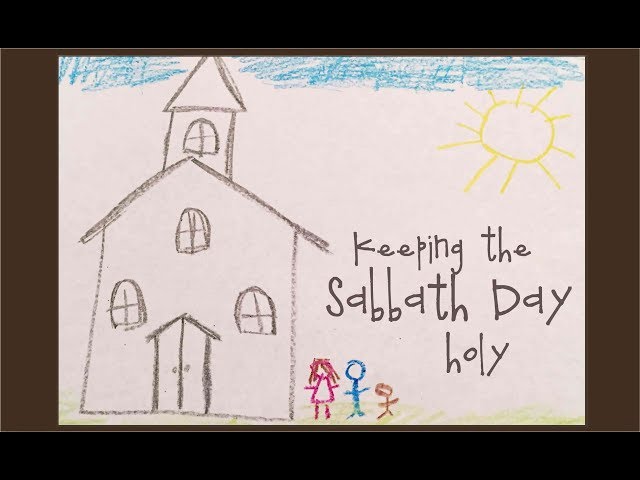
In the Old Testament, God established precise and regular methods for giving, helping, working, and resting. And today, wisdom and spiritual discernment guide believers to find the best ways to use the time God gives—whether meeting together on Saturday, Sunday, or another day of the week. Believers are called to treat one another with grace and forbearance, as we strive for unity.
Father, You are the one true, holy, and worthy God. Open our eyes to see You in all of life. You own everything, including every moment of our lives. Help us to honor You with our time. Guard our hearts from sin and selfishness. Grow our love for You and what You want. Give us practical ways that we can serve You today and everyday. In Jesus’ name we pray, Amen.
Week of February 2 through February 7
Something to think about this week: Sustaining practices of the church, i.e. baptism and Communion.
Daily Bible Readings
Mon. – Exodus 14:21-31 – Saved through The Sea.
Tue. – Romans 6:1-14 – Baptized into a New Life.
Wed. – Ex. 16:13-16, 31 – God Provides Bread in the Wilderness.
Thu. – John 6:28-40 – Jesus Is the Bread of Life.
Fri. – Genesis 14:14-20 – A Blessing with Bread and Wine.
Sat. – Matthew 3:13-17 – Beloved Child of God.
Next Week: Matthew 3:13-17; 28:19-20; 1 Corinthians 11:23-29

The regular and ongoing observance of the Lord’s Supper serves as a witness to the world, and to one another, that the death of Jesus matters. It is the central event of history. When we participate in the Lord’s Supper, we are reminded of His great love, and we are equipped to carry the message of the cross to our friends and neighbors.
Lesson 10 – February 8 – Baptism and the Lord’s Supper
The breaking and eating of bread is a reminder of Jesus and His body given for us (1 Cor. 11:24). Likewise, the drinking of the cup is a reminder of Jesus and His blood shed for us. His words, passed on by Paul, say, “This cup is the new covenant in my blood” (1 Cor. 11:25). The new covenant fulfills the promises to God’s people, given through the prophets. With the new covenant comes forgiveness of sins, the giving of God’s Spirit, and the changing of hearts (see Jer. 31:31-34; Ezek. 36:26-28). Christ’s sacrificial death makes all of these a reality. Thus, followers of Jesus participate in the Lord’s Supper to remember what Jesus has accomplished: to “proclaim [Jesus’] death, until he comes” (1 Cor. 11:26). Sharing in the Lord’s Supper is a witness to the world that the sacrifice of Jesus matters.
One day, people from every tribe, language, people, and nation will join in the banquet that God has prepared. Our practices of Communion and baptism are a small taste of that future reality—the conclusion of story, written by the greatest of all authors.
Do you ever have trouble believing that you are a part of God’s story?
It might be easy at times to think of Jesus’ life, death, and resurrection as a story—an impactful story, but still a story. It can be easy to feel a distance from it and forget that this story is real and for us. It isn’t about things that happened “a long time ago and far away.” It is a story that is relevant to our lives today.
What happens to followers of Jesus when they fix their gazes on the life, death, and resurrection of Jesus?
When we focus on Jesus’ life, death and resurrection, we find our faith fortified, our complacency challenged. Through God’s great love for us and Jesus’ once-for-all sacrifice, it is possible to live as children of God and citizens of the kingdom. Fixing our eyes on Jesus corrects our skewed perceptions of God and self.
Share how baptism—yours or someone else’s—or participation in Communion has strengthened your faith.
Remembering our baptism can give assurance of our welcome into God’s family. Sometimes witnessing someone else’s baptism can embolden our faith, and it reminds us of what Jesus has accomplished. Similarly, coming to the Lord’s table helps us to remember the gospel and to walk in newness of life. In both of these actions, we are reflecting the actions of our good God, what He has done and said is true about us.
God, Thank You for making broken, hurting, and sinful people a part of Your story. Thank you for the body and blood of Jesus, given and shed for us on the cross. Thank You for giving practices that help us fix our eyes on Jesus. Help us now to walk in the newness of life that You have made available to us. Empower us with Your Holy Spirit. In the name of Jesus we pray. Amen.
Week of January 26 through January 31
Something to think about this week: One place in your life where you’ve witnessed growth and development.
Daily Bible Readings
Mon. – Ps. 22:22-28 – A Community of Testimony and Praise.
Tue. – Eph. 1:15-23 – A Community of Hope-Filled Heirs.
Wed. – Matt. 16:13-20 – A Community with Divine Authority.
Thu. – Eccl. 4:7-12 – A Community Made Strong Together.
Fri. – Ps. 150 – A Community United in Worship.
Sat. – Mark 4:26-32 – A Community Silently Growing.
Next Week: Mark 4:26-32; Ephesians 4:4-6,11-18

Lesson 09 – February 1 – The Christian Church
When we plan to make a change for God, we often start on the largest scale. We could stand to pay closer attention to the ways that God takes small actions and meager offerings and multiplies them for something more meaningful than we would otherwise expect.
My cousin is fighting cancer and has been for several years. The fight is nearing the end, I fear. Has she trusted Christ? That question weighs on my heart, yet I know she is a very private person who does not want to talk about faith. I have been praying that God would reach her—and recently, I was able to drive her on an errand an hour away. It gave us time to talk. Talking about serious things in the car is a good thing. We don’t have to face each other, and it’s not as scary. (I discovered this tip when having difficult conversations with my teenager, years ago.)
God guided our conversation. I was able to ask her if she believed in life after death. We talked a bit more, and I shared that I had peace about dying—I have no fear—because I have put my trust in Christ. I know what is coming, and I told her that she can have that peace too.
She didn’t say much, and I could tell that she was getting uncomfortable. I felt that I had done all I could do by sharing my faith, giving her something to ponder. I will keep praying.
God, We tend to look at ourselves and scoff. What can we have to offer? Remind us in the week ahead that You took the small movement of Jesus’ followers to create a global church. Help us to feel connected to Christians who may worship in other places, as we remember that You value small gatherings and small things. We ask for You to multiply our efforts, in Christ’s name. Amen.
Week of January 19 through January 24
Something to think about this week: Evidence of growth and maturity in faith
Daily Bible Readings
Mon. – Matthew 4:18-22 – Grow by Following Jesus.
Tue. – Deuteronomy 7:7-11 – Grow in Love for God.
Wed. – Colossians 1:3-6,11-12 – Grow in Spiritual Wisdom.
Thu. – Proverbs 1:2-7 – Grow in the Fear of the Lord.
Fri. – Proverbs 1:8-12 – Grow in Discerning Good from Evil.
Sat. – Philippians 3:10-16 – Keep on Growing.
Next Week: Matthew 4:18-20; 16:16-18; John 21:15-18; 2 Peter 3:14-15, 18

Lesson 08 – January 25 – Call and Growth
I’ve always felt that Peter was one of the most relatable characters in Scripture. Here is a working man who stepped out in faith. Then, he discovered that his teacher is actually God’s long-awaited Messiah. Although Peter failed Jesus, Jesus loved Peter and reaffirmed his calling, inviting Peter to respond by loving and serving others in the ministry of the church. Peter served by sharing the message with thousands of people—the church’s first mass preacher (Acts 2:14-41). He followed through and cared for others, witnessing the birth and growth of the early Christian movement. His final challenge is to be like Jesus, to grow in grace and the knowledge of Him.
We can learn several lessons from Peter’s life. First, Jesus invites us to follow, like He did for Peter. Peter had to leave behind his previous way of life. Have you stepped out in faith to follow Jesus? It means more than thinking that Jesus is a good man, a worthy leader, or a moral teacher. It means knowing Jesus is God incarnate, the Savior.
Second, Peter shows that it is possible for the most noble of us to fail. Even those who are exceptionally dedicated to Jesus will struggle with sin, temptation, and the desire to give up. No person is without sin, and none of us has reason to brag (1 John 1:8). Instead of hiding, our task is to rededicate ourselves to following Jesus after we fail. Jesus forgave Peter, and Jesus forgives and loves His followers—even in their brokenness.
Finally, Jesus asks you to show love by serving others. This service will cost you. You’ll have to give of your time, energy, and more. But each sacrifice for Jesus is meaningful, for Jesus considers our love for others to be the same as serving Him (see Matt. 25:31-46). In other words, Peter shows us that real people can have a powerful ministry for the kingdom.
Click to expand Discussion Questions
1 How and when did you decide to follow Jesus?No matter when we came to Christ, we can all share about how we have seen the effects of salvation on our lives. Every day offers opportunities to live out the salvation we have received. It is important to learn to tell this story well; that way we will always be prepared to encourage others according to the grace we have received.
2 When have you chosen to hide instead of coming back to Jesus?
When we sin, we can be overwhelmed with shame. Sometimes, when we feel that shame, we are reluctant to turn back to Jesus. We might feel as though He won’t want us anymore, or that we’ve strayed too far. We might be afraid of what we’ll need to give up, and we hold on tighter to our habits.
3 What is the hardest area for you to sacrifice in order to bless someone else?
Maybe you give money generously, but hesitate to get involved in ministry. Or maybe you find yourself reluctant to give up something precious. When we find one area of sacrifice, we might look to other opportunities to find what is difficult to give. Jesus asked for His disciples to follow with abandon.
Jesus, Thank you for Your invitation to follow, for seeking us out before we sought You. We want to be Your disciples, and we want to face troubles and disappointments with courage and conviction. If there is any part of us that is afraid to admit to our weaknesses, overwhelm us with the knowledge of Your loving words to us. Lead us to the places where we can also feed Your sheep. Amen.
Week of January 12 through January 17
Something to think about this week: What is a prayer you find yourself repeating again and again?
Daily Bible Readings
Mon. – James 1:2-8 – Praying for Wisdom.
Tue. – Jeremiah 29:10-14 – Praying and Seeking God.
Wed. – Philippians 4:4-9 – Praying with Thanksgiving.
Thu. – Psalm 61 – Praying for Protection.
Fri. – Matthew 6:5-15 – Praying as Jesus Taught.
Sat. – Genesis 18:23-33 – Praying for Others.
Next Week: Genesis 18:25-27; Luke 18:9-14; 1 John 5:14-15
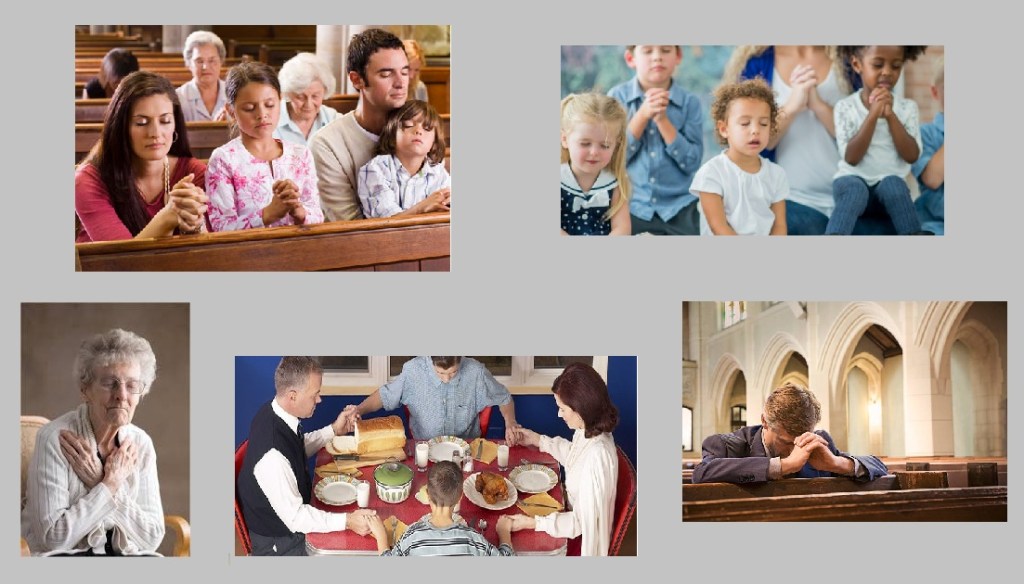
Lesson 07 – January 18 – Prayer and Humility
This week, my next-door neighbor lost her husband. He was only sixty-five (which is sounding younger all the time). He went for a heart procedure, and after several days in ICU, they had to make the difficult decision to turn off the life-saving equipment, with no hope for recovery. That was his wish in that situation, but it was still so very difficult to follow his wishes.
Before he died, I was praying “without ceasing” for him and Sarah, his wife. We had lived next to them for twenty-four years and experienced much life together. I asked God, the Great Physician, to heal my friend. I prayed, recalling God’s instructions to “ask, seek, knock” (Matt. 7:7) and the promise that “whatever you ask in prayer, believe that you have received it, and it will be yours” (Mark 11:24). I knew God heard my prayers. Yet I also trusted that God was God, and I was not. I had no business telling God what to do but could only pray my wishes and leave the results with the One who is omniscient, knowing all. He has His plans and His purposes, and we must come to terms with that.
Does that mean we don’t pray? No for prayer changes us. It shapes us to submit to God’s purposes, although we may not like God’s response. He asks us to present our requests, so we must humbly come to Him with all of our requests and be willing to accept His answers because we trust Him.
This lesson suggests that we can approach God with boldness. We don’t have to be afraid of honestly expressing our confusions and doubts. It is better to bring these to God in prayer and ask for His help than to handle issues ourselves. God already knows our thoughts, which means that we don’t have to be afraid to express them.
Father, Thank You for being a God who walks and talks with us. Thank You for listening to us as we come to You with our sincere questions and requests. We trust Your merciful and loving character, that You invite us to approach in prayer. Help us to ask for what we really need, according to Your will; and help us to submit all of our desires to You. In Jesus’ name we pray. Amen.
Week of January 5 through January 10
Something to think about this week: Have you lost anything recently? If so, notice your emotions when you are searching and how they change if that item is later found.
Daily Bible Readings
Mon. – Ezekiel 18:20-23, 27-32 – Turn Away from Sin.
Tue. – Isaiah 1:10-21 – Turn Toward Righteousness.
Wed. – Mark 2:1-12 – Jesus Has Power to Forgive Sins.
Thu. – Hebrews 11:1-10 – Draw Near to God by Faith.
Fri. – 2 Chronicles 7:12-16 – Repent and Seek God’s Face.
Sat. – Acts 2:32-39 – Repent and Be Baptized.
Next Week: Luke 15:11-24; Acts 2:38-39

A police car pulled up in front of grandma Bessie’s house, and grandpa got out. The polite policeman explained that the elderly gentleman said that he was lost in the park and couldn’t find his way home.
“Morris,” said grandma, “You’ve been going to that park for over 30 years! How come you get lost today?”
Leaning close to grandma, so that the policeman couldn’t hear, grandpa whispered, “I wasn’t lost. I was just too tired to walk home.”

Lesson 06 – January 11 – REPENTANCE AND FAITH
Outcasts Are Invited
I still cringe when remembering my high school lunch hour. The athletes, band geeks, and theater kids were all in one room; but they were divided into different tables. At my particular school, if you didn’t have a group, you were labeled a “loner” or “outcast.” If one of the popular kids talked with an outcast, people would ask, Why?
Among the controversial things that Jesus did, He was known for eating with sinners and outcasts (Matt. 9:10; Mark 2:16; Luke 5:30). The religious leaders of the day saw the world as divided between those who were walking with God and those who had already chosen a life of sin.
But the reality is, humans find it easier to spot the faults and weaknesses of others over their own. All have sinned, and we would be left sitting “alone” as an outcast from God, were it not for the relentless love of the Father. Jesus did not wait for our status to be good enough to join us at the lunch table: He expressed the radical welcome of God, assuring us that we do not have to live as unredeemable sinners.
Jesus calls the former sinners and people of the land to come and follow Him. He welcomes them to repent and believe, to transform their lives. When that happens, like the son of the parable returning home, we are counted as children of the kingdom, Christ’s friends (see John 15:14-15; 1 John 3:1). The message of Christ is good news, especially for the outcast.
Dr. Martin Luther King said, “Every time I look at the cross, I am reminded of the greatness of God and the redemptive power of Jesus Christ.” In Jesus’ kingdom, He reaches out to every table. He welcomes all to dine with Him. Revelation 19:9 speaks of a great feast that is coming, “the wedding supper of the Lamb.” As the time draws near, God doesn’t turn away any who come to Him.
We serve a God who offers forgiveness and welcome to all who wander and later return. He’s patiently waiting for everyone to come home.
Father, Thank You for Your grace and mercy. Help us to remember that we were once lost, but have been found. Let our hearts continue to be tender toward those around us who do not know Jesus as Savior. Use us to be the hands and feet of Jesus in our coming and going. Lord, use our lives to reach those around us who are far away from You. We pray this in Jesus’ name. Amen.
Week of December 29 through January 3
Something to think about this week: God’s way of life for those who “walk in the light.”
Daily Bible Readings
Mon. – Genesis 3:1-13 – The Man and the Woman Sin.
Tue. – Genesis 3:14-24 – God Pronounces Judgment.
Wed. – Romans 1:18-25 – God’s Wrath Is Revealed.
Thu. – Mark 7:14-23 – Jesus Warns against Defilement.
Fri. – Psalm 51:1-12 – A Prayer for God’s Mercy.
Sat. – Micah 6:1-8 – God Demands Right Living.
Next Week: 1 John 1:5-2:6

Light and Darkness, Sin and Forgiveness
5 This is the message we have heard from him and declare to you: God is light; in him there is no darkness at all. 6 If we claim to have fellowship with him and yet walk in the darkness, we lie and do not live out the truth. 7 But if we walk in the light, as he is in the light, we have fellowship with one another, and the blood of Jesus, his Son, purifies us from all sin.
Lesson 05 – January 4 – Sin and Forgiveness
I recently watched a show about one detective’s quest to investigate her father’s murder. Even though someone confessed to the crime, more clues and evidence came to light and showed that the person who confessed could not have been the killer. Instead, he took the fall for something he did not do. He had several convictions and was all too willing to confess to one more crime, in exchange for a handsome reward. He figured, Why not? In his mind, there was no harm in adding a little extra time to what was already a life sentence. But in doing so, he became an obstacle in the detective’s case.
Sadly, many people fall victim to the same “Why not?” mentality. We come to believe that we are too far gone to turn our lives around and to seek forgiveness. But as long as there is breath in our lungs, activity in our brains, and hope in our souls, it is never too late to follow the path that Jesus walked. It means walking away from the darkness that separates us from the source of light the God who guides us in the right paths. It means obeying His commands: loving Him, loving others, living above reproach emulating Jesus in our everyday lives.
God of light, In You there is no darkness at all. So fill us with the light of Your presence, until there is no room for darkness at all. Forgive and cleanse us from all sin, by the blood of Jesus, our atoning sacrifice. Help us to walk in the light, as You are in the light. We want to be more and more like Jesus. Amen.
Week of December 22 through 27
Something to think about this week: The tone that children use when they call their parents.
Daily Bible Readings
Mon. – Zechariah 4:1-7 – The Spirit Accomplishes God’s Will.
Tue. – 1 Corinthians 12:1-13 – The Spirit Bestows Gifts.
Wed. – Isa. 11:1-9 – The Spirit Gives Wisdom and Understanding.
Thu. – Matthew 1:18-25 – The Spirit Works in Jesus’ Birth.
Fri. – Acts 7:51-60 – The Spirit Reveals God’s Glory.
Sat. – Psalm 104:24, 29-35 – The Spirit Creates and Renews.
Next Week: Romans 8:12-17,26-27

But let’s be clear, not everyone has the same rosy image of adoption. How many fables feature an evil stepparent? You may have people in your group who have a personal experience of adoption or foster care. In my state and many others, the foster system is tragically overburdened. The world is full of children who, for one reason or another, do not grow up with the security of a stable home and the clear sense of belonging.
If you have ever struggled to belong, perhaps you can relate. Be on the lookout for these tender hearts this week. We have an incredible opportunity to call God our adoptive Father, to call Jesus our “co-heir” in the faith. If we have observed parents falling short of the ideal, may God stand in the gaps.
All praise to our God and Father, who loves us so much that His Spirit calls us to Himself and names us son and daughters: “I will be a Father to you, and you will be my sons and daughters, says the Lord Almighty” (2 Cor. 6:18).
Lesson 04 – December 28 – THE HOLY SPIRIT INVITATION

Eager Heirs
Recently my family has been having conversations about future inheritance, as we determine which family heirlooms will go to each child. Grandpa’s guitar will go to one family member, and Grandma’s china to another. But one heirloom has proven especially challenging to assign: the German schrank.
A schrank, in case your family is not blessed with one, is a massive, freestanding closet of sorts. Wherever it sits, it fills the room from wall to wall, floor to ceiling. Even though it has been in our family for generations, finding someone willing to inherit it has been difficult. No one wants to be burdened with this heavy piece of furniture for the rest of their life.
Like me, you may someday be the reluctant heir to something large and cumbersome. But we can all look forward to an inheritance that is far more enduring and valuable than anything our families may pass down.
God has adopted us as part of His family. As His children, we are even His heirs. We have an inheritance that will never perish, spoil, or fade (1 Peter 1:4). Unlike family heirlooms that can lose value, be damaged, or become burdensome, God’s inheritance lasts forever.
If we are God’s children, we have received the Holy Spirit as a down payment of our eternal inheritance (Eph. 1:13). The Spirit empowers us to live in freedom from fear, sin, and death. We are free to pursue a life of righteousness, and to experience a deep, intimate relationship with our Father even though our world remains full of disordered and troublesome things.
Our inheritance, guaranteed by the Spirit, is more than a future promise. It is a present reality that shapes our lives as God’s sons and daughters. If our days are troubled and our prayers feel halting, God is with us. He knows what we need.
Heavenly Father, Thank You for adopting us as your children, shown through the gift of Your Spirit. We’re grateful for the privilege of being part of Your family as co-heirs with Christ. Help us to live in the freedom You have given, following the Spirit’s leading and not living according to desires that aren’t in alignment with Your perfect will. Thank You for the Spirit’s comfort and guidance, interceding for us when we do not know how to pray. Amen.
Week of December 15 through December 20
Something to think about this week: Can you name a common misunderstanding of “love?”
Daily Bible Readings
Mon. – Psalm 110 – The Messiah Sits at God’s Side.
Tue. – Romans 5:1-11 – Christ Died for the Ungodly.
Wed. – John 3:14-21 – Christ Offers Eternal Life.
Thu. – John 10:9-16 – Christ Cares for the Sheep.
Fri. – Isaiah 9:3-7 – Welcome the Davidic Heir.
Sat. – Psalm 2 – The Messiah Reigns Victoriously.
Next Week: Luke 15:3-7; Romans 5:6-10
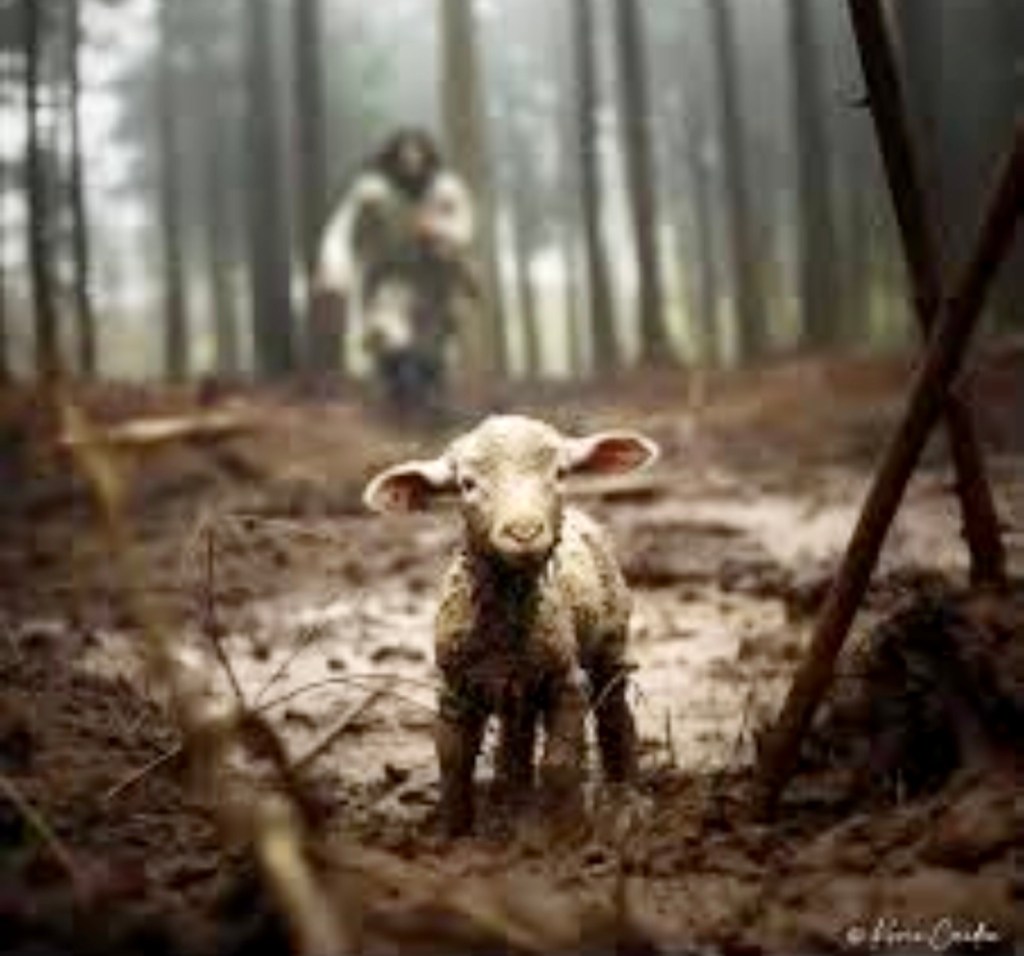
What an incredible gift the first Christmas present, given to all who believe and receive Him as their Savior. “For God so loved the world that He gave His only begotten Son, that whoever believes in Him should not perish but have everlasting life,” says John 3:16.
Thank Him this Christmas for the very best gift, the fact that He sought you out and found you.
Lesson 03 – December 21 – Christ The Savior
Loving “Fellow Enemies”
We can only love others fully as we receive and recognize Jesus’ love for us. Today’s readings make abundantly clear that God’s love through Jesus was extended to us while we were lost and helpless—in the striking words of Romans 5:10, “God’s enemies.” God loves us, but not because we deserve it. Period. This should not only give us a deeper understanding of God’s love for us, but also point the way forward for how we should live and love others in Christ.
In many ways, we are all still helpless sheep. Christians don’t become immune to temptation or sin. But an important change comes when we know our Shepherd and listen to His voice (John 10:14). We can call upon Him when we need rescue (which is often). And just as Jesus laid down His life for His sheep, He seeks those “not of this sheep pen” (v. 15-16). We can be His partners in that mission.
Or, we can be like the Pharisees of Luke 15, who were jealous of Christ’s time and attention. We have to guard against drawing the circle of God’s rescue as too small and giving up on those we deem unworthy, like political opponents and those who have very different experiences from our own. It’s easy to demonstrate love and to share Christ when we hold things in common. It’s harder to face those who offend us and to see them as the very people that Jesus might ask us to befriend.
He met each of us in our weaknesses and faults, when we were His enemies. If He can change us, He can change anyone. So let’s ask God to help our fellow enemies who cross our path. Jesus sees and loves them.
Jesus, Thank You for how much You love us, and the lengths You went to in order to find us—including dying on the cross for us. Help us appreciate the depths of your love and sacrifice—for all of us. Open our eyes so that we can really see and love others, the way You’ve called us to do—the way You already love us. Amen.
Week of December 8 through December 13
Something to think about this week: Times when you are seeking satisfaction or security
Daily Bible Readings
Mon. – Isaiah 49:13-17 – The Father’s Motherly Compassion.
Tue. – John 4:20-24 – The Father Seeks Authentic Worshipers.
Wed. – Isaiah 40:27-31 – The Father Strengthens the Powerless.
Thu. – Isaiah 64:1-8 – The Father Exacts Discipline.
Fri. – Psalm 103:1-5,10-14 – The Father Blesses and Forgives.
Sat. – James 1:13-18 – The Father Gives Perfect Gifts.
Next Week: Matthew 6:24-34

A man calls the National Security Agency…
Man: Hello, I heard you record all our phone conversations, is that correct?
Agent: No sir, we don’t do that
Man: Oh shoot. I was just talking to my wife and she gave me a list of things to do and I can’t remember! I thought I would check with you rather than call her back and let her know I wasn’t listening!
Agent: I’m sorry to hear that sir, but as I said, we don’t listen to civilian conversations…
However, you should:
-Pick up a gallon of milk
-2 Dozen eggs
-4 Macintosh apples
-Help Sofia with her math homework
Lesson 02 – December 14 – Our Heavenly Father
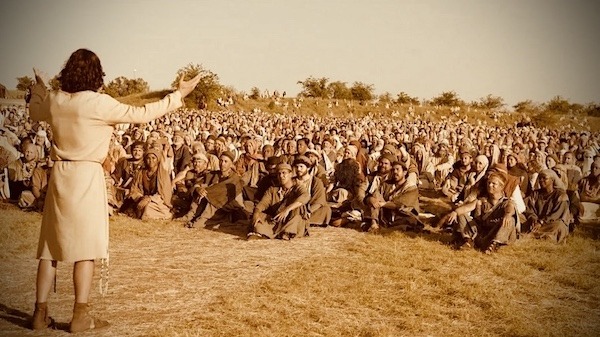
He asks listeners to adopt a completely different relationship to money. Instead of looking to gain treasures of the world which can deteriorate or be taken in an instant Jesus speaks of “treasures in heaven” (Matt. 6:19-20). The heavenly Father has good things in store for His people and will keep those heavenly treasures safe.
But Jesus isn’t making a point about the need for better banks. God really cares about the heart of His people. It is hard to be ready for God to reshape the world if we are wrapped up in maintaining our financial security. Jesus invites His listeners to an attitude of freedom—freedom from concern so that we can freely serve God. How we operate shows the attitude of our hearts. Thus, Jesus forces the choice: be devoted to earthly security or be devoted to God.
Jesus challenges followers to consider how tightly we possess our possessions. Have these become our “master,” or do we use them to serve God (v. 24)? Are we devoted to the new thing that God is doing, or are we chasing a comfortable standard of living? When the prophet Elijah challenged Israel, he said, “If the LORD is God, follow him; but if Baal is God, follow him” (1 Kings 18:21). In the same vein, Jesus says, “You cannot serve both God and money” (Matt. 6:24). Matthew gives the Aramaic word for wealth, mammon, a personification of this unfettered pursuit for material possessions.
Jesus is not talking about things that are “extra,” what we call wants versus needs. That would be too easy! Jesus says His followers have no need to take “thought of” (KJV) or “worry about” (NIV) needs either: “your life, what you will eat or drink; or about your body, what you will wear” (v. 25). His audience must have included people without enough food to eat or clothes to wear. It is hard not to worry about basic essentials like these!
But God gave us life. He knows how to take care of our bodies. We don’t simply wait for food, or clothes to fall from the skies, although God did feed His people with bread from heaven (Ex. 16:4). But as we do prudent things to keep our needs met, we can rest in the sure knowledge that we are seen by God. His concern for us is clear, even from the example of “birds of the air” (v. 26). These creatures build homes and search for food, but they do not worry about daily tasks. Somehow, God feeds them.
Jesus asks a rhetorical question: What good does worry bring? (v. 27). It can’t make us taller (KJV), nor can it give us any more time (NIV). It gives nothing, but it robs us of joy.
Father in heaven,
We know that You see us and our needs, but we are forgetful. We forget that we are Your precious people. We forget that Your kingdom is coming and already at hand. We forget that Jesus gives us freedom. Remind us of all these things. Teach us to place our hope in the treasures of heaven, rewards that will never diminish. We surrender everything else to You.
Amen.
 Bethel Cumberland Presbyterian Church